How to Give Your Homeschool Space a Warm, Cozy Aesthetic That Invites Learning
- HumbleHomeschoolerMama
- 5 days ago
- 8 min read
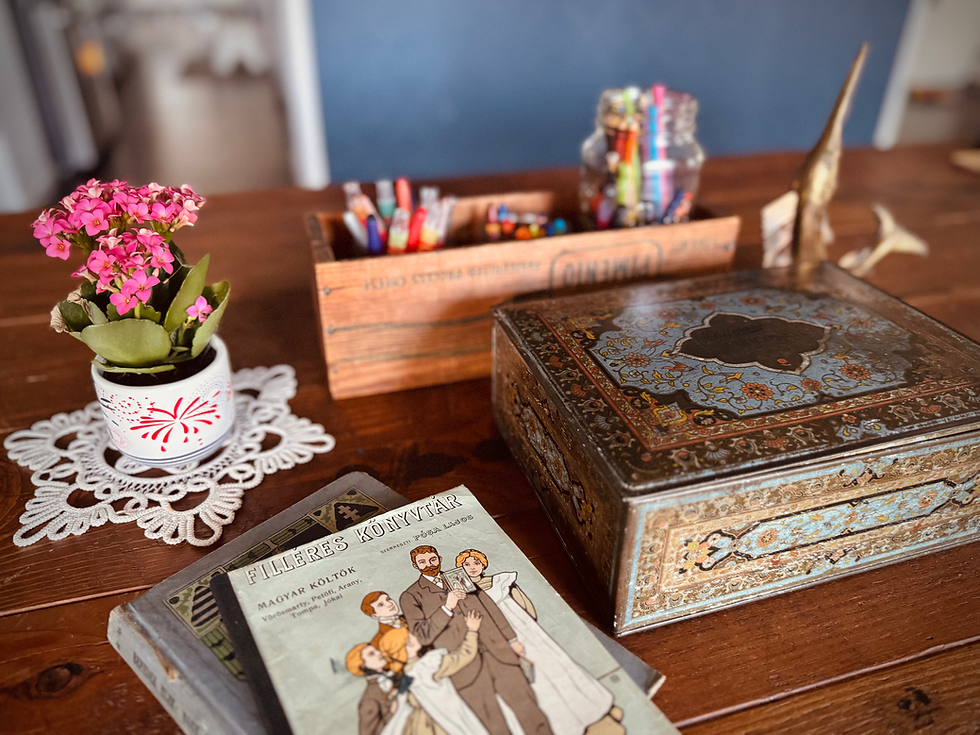
There's a feeling I've been chasing since we started homeschooling.
It's the feeling of my grandmother's house. Of a weekend at our little family cottage in Eastern Europe, where the air smelled like wood and tea and old paper. Where time moved slower. Where every corner had something interesting to look at — a doily under a vase, a basket full of something useful, a worn wooden shelf with books lined up like old friends. Where sitting down at the table felt like settling in, not rushing through.
That's what I want for my son's learning environment. Not a classroom. Not a Pinterest-perfect staged space. Something real. Something that slows the pace, calms the mind, and makes a child want to stay.
I've been building it slowly. That's the honest truth — it's a work in progress, and I think it always will be. I gave it a big boost when we first set up our homeschool space, but I keep finding new things to add. A small wooden box here. A new basket there. A candle holder I spotted at an antique store on a Saturday afternoon when I finally had an hour to myself.
Some things came from antique stores and thrift shops. Some from yard sales. And because I'm a busy mom who can't always drive to an antique store and spend an afternoon hunting, quite a few things have come from online shopping too. Once you have the vision for the look — and you will, once you start — you'll start seeing additions everywhere.
I want to share what's working in our space, and link everything I've found online so you can start building yours without leaving home.
The Philosophy: Slow Decorating
Before I get into the actual items, I want to say something about the approach, because I think it matters.
Don't try to do this all at once. A space that feels genuinely lived-in and warm is built over time, not assembled in a weekend. That's what makes it feel real instead of staged.
Start with one or two things. Maybe a basket and some mason jars. Put them in your space, live with them for a week, and see what they make you want to add next. The space will tell you what it needs if you let it.
That said — if you want to give your space a big initial boost, I'll tell you exactly which things I'd prioritize. Keep reading.
👉 Everything on this list is linked on Amazon at the end of the post — scroll to the bottom anytime you want to grab something.
What Makes a Space Feel Warm and Inviting
Here's what I've learned from slowly building ours: warmth comes from natural materials, soft textures, and things that have a story or look like they might. Wood. Wicker. Lace. Ceramic. These are the materials of old country kitchens and cottage libraries, and they work together effortlessly because they all come from the same visual language.
Color matters too. Warm neutrals — creams, browns, soft greens, aged whites — create a visual calm that bright primaries never quite achieve in a learning space. When everything in my son's eyeline is warm and quiet, he settles into work faster. I don't think that's a coincidence.
Now let me walk you through each element I've added to our space and why it works.
The Details That Build the Aesthetic
Mason Jars + Wooden Crates — The Lovely
Supply Display That Actually Works
This sounds so simple, and it is. But I want to tell you what it changed for us.

Before, pencils and markers lived in plastic cups or jumbled in a drawer. Now they live in mason jars, grouped by type — pencils in one, markers in another, colored pencils in a third — and the jars sit in a small vintage wooden crate on the table. It looks beautiful. It's also more functional than anything we had before because everything is visible and within reach.
More than that though: my son is more careful with his supplies now that they're displayed rather than dumped. There's something about things being arranged nicely that makes a child treat them differently. I didn't expect that, but it's real.
Wicker Baskets — Everything Feels More Organized and More Beautiful

Baskets, hampers, storage boxes — all of it. Wicker has a homey, natural quality that instantly warms up a space, and the truly great thing about it is that all wicker goes together. You don't have to worry about matching. You can buy a large basket for puzzles, a medium one for art supplies, a small one for erasers and pencil sharpeners, and they'll all look like they belong together because they inherently do.
In our space, wicker does most of the heavy lifting for loose items that would otherwise look chaotic. A pile of puzzle pieces in a wicker basket looks intentional. The same pile in a plastic bin looks like a mess.
If I had to pick one category of item to start with, it would be wicker baskets. They give you the most visible warmth for the least effort, and they're endlessly useful.
Tea Time — Yes, Really
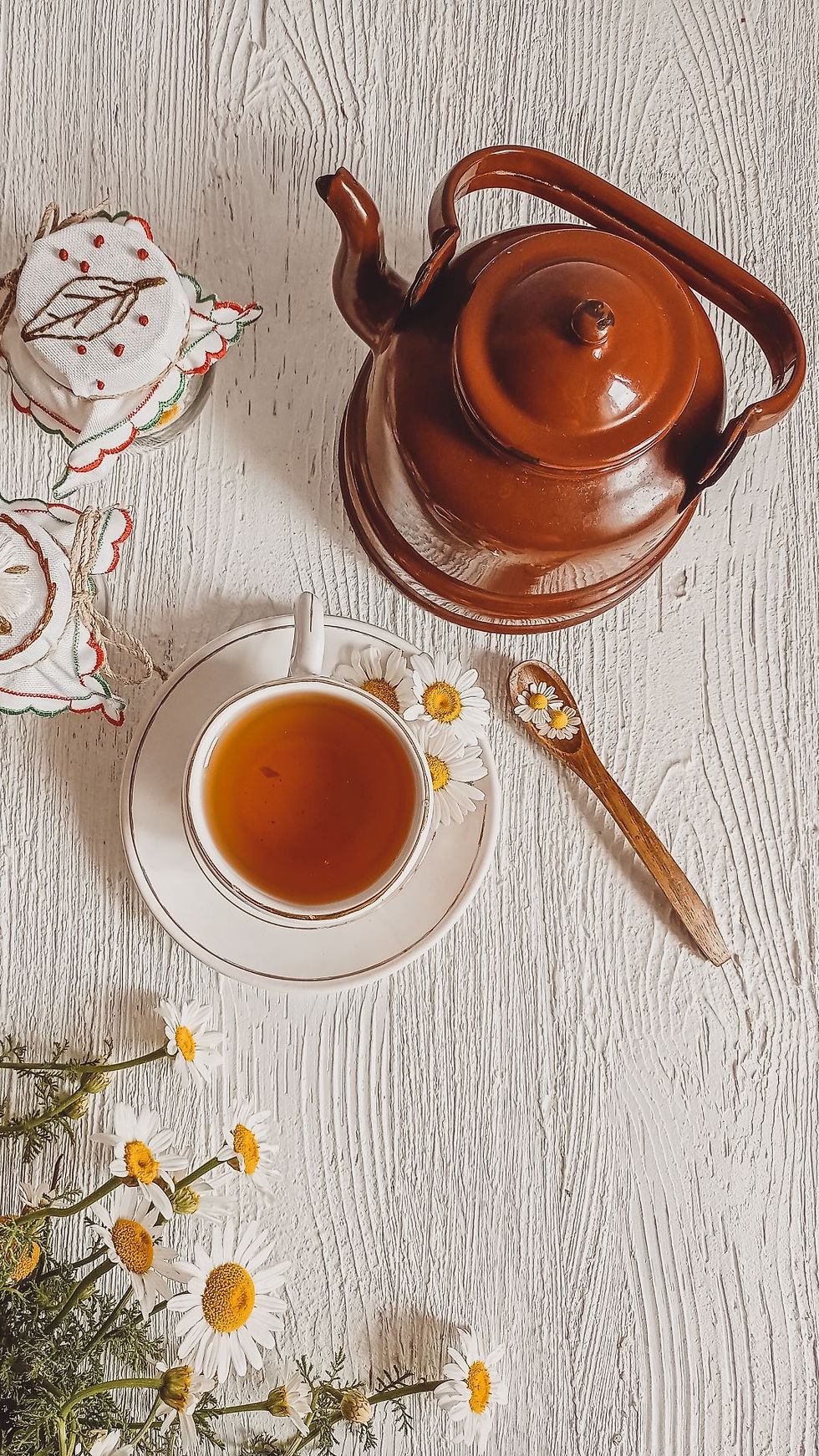
This might sound a little indulgent for a homeschool space. I promise it isn't.
We have tea time. Sometimes it's for reading poetry aloud. Sometimes it's for an impromptu little book club moment when we're both into whatever we're reading. Sometimes it's just because the morning got off to a slow start and we needed something to gather around before we began.
There is something about the ritual of putting on the kettle, pouring from an actual teapot into actual cups, and sitting down together that shifts the atmosphere entirely. It says: we're not rushing. We're here. Let's begin.
I recommend a teapot and matching cups that have a slightly antique or traditional look — nothing precious, nothing you'd be afraid to use daily — and a nice tea with a tin box.
The tin box becomes storage after the tea is gone, which is very satisfying.
Lace Doilies — The Smallest Detail With the Biggest Impact

I know. Doilies sound like something from a great-aunt's living room. But hear me out.
A small lace doily under your teapot, under a vase of flowers, under your mason jar display, or under a candle holder does something to the whole composition of a surface. It frames it. It says this was placed here on purpose. It adds texture and softness and a little old-world charm without taking up any space or costing much at all.
In Eastern Europe, doilies were everywhere when I was growing up. On windowsills, under lamps, on the table at Grandma's. They were so common I didn't even notice them — until I started setting up my own space and realized I'd been missing them without knowing it.
They're one of the cheapest, easiest additions on this list and one of the most effective.
A Chalkboard — Big or Small, It Changes Everything
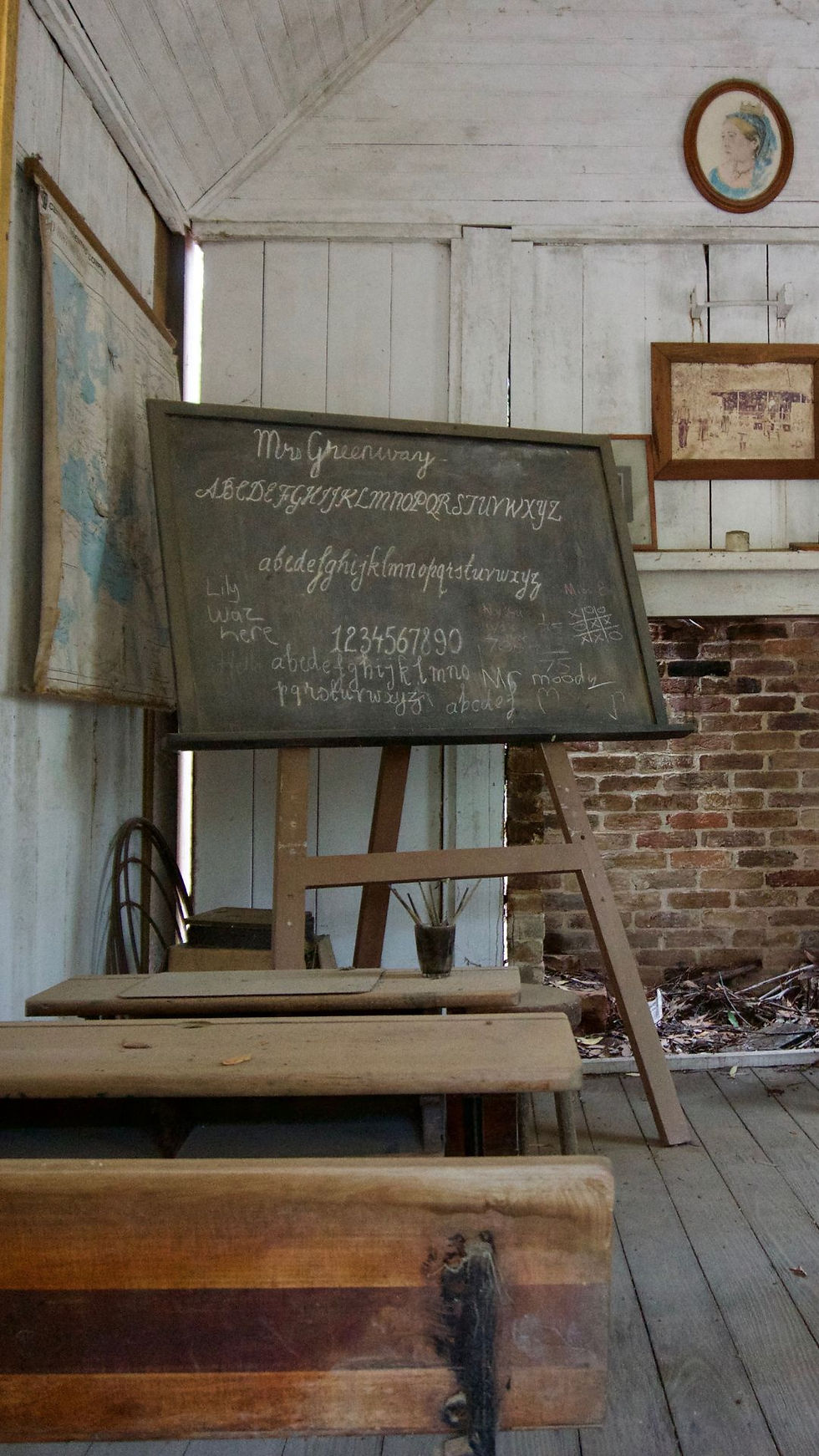
My son will do math on paper if I ask him to. He will sprint to the chalkboard if it's there.
There is something about chalk in hand and a black surface in front of you that no whiteboard, no iPad, no worksheet can replicate. The texture. The sound. The satisfaction of making a mark and then erasing it. It's tactile and immediate and somehow ancient-feeling in the best possible way.
A chalkboard also gives your space an instant warmth and that schoolhouse quality that makes a learning environment feel purposeful. A big one on the wall is a statement piece.
A small framed one on the table or shelf is a charming detail. Either way — get one. You won't regret it.
Candle Holders and Bookends — The Finishing Touches

These are the things your eye catches as it moves across the room.
A copper deer bookend between a row of books. A silver bunny holding up the art history shelf. A warm candle glow from a vintage holder on the windowsill. They're small, they're simple, and they round out a space in a way that's hard to explain until you have them.
Bookends give your bookshelves that collected, intentional look rather than just books shoved in wherever they fit. Candle holders bring warmth and glow — real candles if you're comfortable, battery-operated if you want the look without the worry. I have both in our space depending on where they live.

When you're browsing, look for pieces with that old-world quality — aged metal, classic shapes, animal silhouettes. These are the kinds of things you find at antique stores and also, surprisingly, online.
The Big Investment: Bookshelves and a Dining Table
Everything above can be done gradually and affordably. These two are the bigger investment — and the ones I'd save up for if you're starting from scratch, because they anchor everything else.

The bookshelves. A proper old-world style bookshelf changes the entire character of a room. When books are housed in something beautiful rather than something utilitarian, they communicate that this is a place where reading and learning matter. I look for that antique or cottage-library aesthetic — warm wood tones, maybe some carved detail, something with presence.
The dining table. This is the one that surprises people most when I tell them. In most American homes the dining room is a formal space that gets used twice a year. I turned ours into a library. Big bookshelves along the walls. A beautiful large wooden table at the center that fits everyone comfortably. And now we're in there all the time — homeschooling, playing board games, having family dinners, doing puzzles on rainy afternoons.
The table becomes the heart of the home when you let it. A warm, solid, wooden table communicates something to a child: we gather here. We work here. We eat here. We belong here. That is not a small thing.
Where to Start If You're Overwhelmed
If you're looking at this list and don't know where to begin, here's my honest suggestion:
Start with the baskets and the mason jars. They're affordable, immediately useful, and they give you a visual foundation to build from. Add a doily or two. Pick up a small chalkboard. Let the space breathe for a few weeks and see what it needs next.
This is slow decorating. It's supposed to take time. The space you end up with will feel like yours because you built it slowly, with intention, over days and weeks and months of noticing what belongs.
And if you want to give it a big initial boost — grab the table and the bookshelves first. Everything else layers in beautifully around them.
The Full Shopping List
Item | What It Does for Your Space |
Beautiful supply display, corrals pencils and markers | |
Houses mason jars, adds warmth and structure to surfaces | |
Storage for loose items, instant cozy warmth | |
Creates ritual, slows the pace, beautiful on a shelf | |
Great tea plus a reusable tin for storage | |
Storage with old-world charm | |
Frames and elevates any surface display | |
Instant warmth, kids are magnetically drawn to it | |
Adds glow and old-world detail | |
Finishes bookshelves, adds character | |
Anchors the room, houses your library beautifully | |
The heart of the home — where everything happens |
Create the space. Build it slowly. Fill it with things that have warmth and weight and story. And then watch what happens when your child walks in and doesn't want to leave.
That's the whole goal.
Disclosure: This post contains affiliate links. As an Amazon Associate, I earn from qualifying purchases at no additional cost to you. Everything on this list is something I genuinely use or love in our own homeschool space.


Comments