How to Set Up Kitchen Activities for Kids (And the 4 Tools That Make Them Work)
- HumbleHomeschoolerMama
- Jun 23
- 5 min read
Quick, honest note: this post has affiliate links. Click and buy, I may earn a small commission, at no extra cost to you. I only recommend what's actually in our kitchen.
Table of Contents
The thing that changed everything was getting a kitchen helper stool. Before that, helping meant balancing a toddler on my hip while cooking.
My oldest now cooks independently. The biggest upgrade wasn't skill—it was finally having equipment that could handle real recipes. He uses this mixer almost every time, and handles it like a pro.
The rainy Tuesday that wrecked my rules
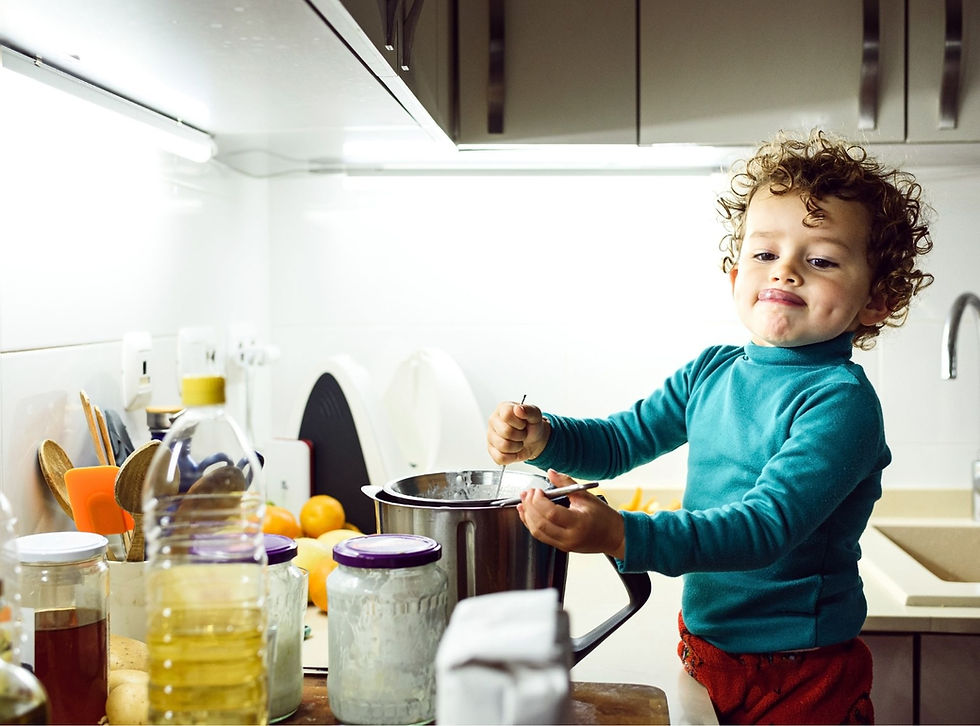
My son was four when he whisked pancake batter on that rainy Tuesday. Before that, my kitchen used to have an invisible fence. Kids on one side, knives and hot pans on the other. I called it safety. It was really just speed — a four-year-old "helping" triples how long anything takes, and most days I wanted dinner done, not turned into a lesson.
Then came a rainy Tuesday, nothing on the calendar, and a flat refusal to hand my kid a screen. I handed him a whisk instead. The only reason that worked is because I'd already put the right tool in his hands — without it, "helping" just means standing too close to something hot.
That single afternoon did more for his math and science than a month of worksheets, and he had no idea he was learning anything. He just thought we were making cookies.
Your kitchen is a better classroom than your curriculum
A recipe is fractions, chemistry, and reading comprehension, stacked into twenty minutes, with zero lesson plan required. Why does baking soda make things rise? Why does butter go from solid to liquid? Your kid will actually want the answer, because the cookies are on the line, not a grade.
Nothing increased participation faster than giving my kids their own apron. The moment they put it on, they stopped feeling like spectators and started acting like the cook.
About that: Here's the thing nobody tells you. None of this works with the wrong setup. Hand a kid adult-sized tools and they often can't participate, they can only watch. Hand them toy tools and the measurements lie, which kills the math lesson before it starts. The right setup makes a bigger difference than most parents expect. When kids can reach the counter and use tools sized for them, they participate instead of watching.
Toddler stage: lower the bar, raise the buy-in
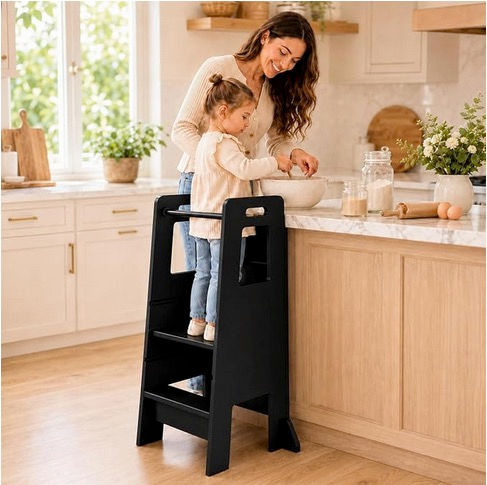
At two or three, "helping" means pouring pre-measured ingredients, stirring badly, and standing on a stool to watch something happen. That's the whole curriculum, and it's enough, but only if they can physically reach the counter.
For us, the kitchen helper stool was the difference between watching and participating. Before we had one, helping usually meant being held or standing too far away to do anything useful. Without it, "helping" meant a toddler on my hip and one free hand, which isn't a lesson, it's a hazard. With it, he could see the counter and actually do something, instead of just orbiting it. I wish I'd bought this a year before I finally did.
The recipe-reading stage: math finally has stakes
Around six or seven, kids can read a simple recipe, and the math finally clicks. "Double this recipe" is a fractions lesson no worksheet beats, because getting it wrong means the cookies taste off. My daughter learned what a third of a cup means because she had to find that exact line, twice, and got annoyed when she couldn't.
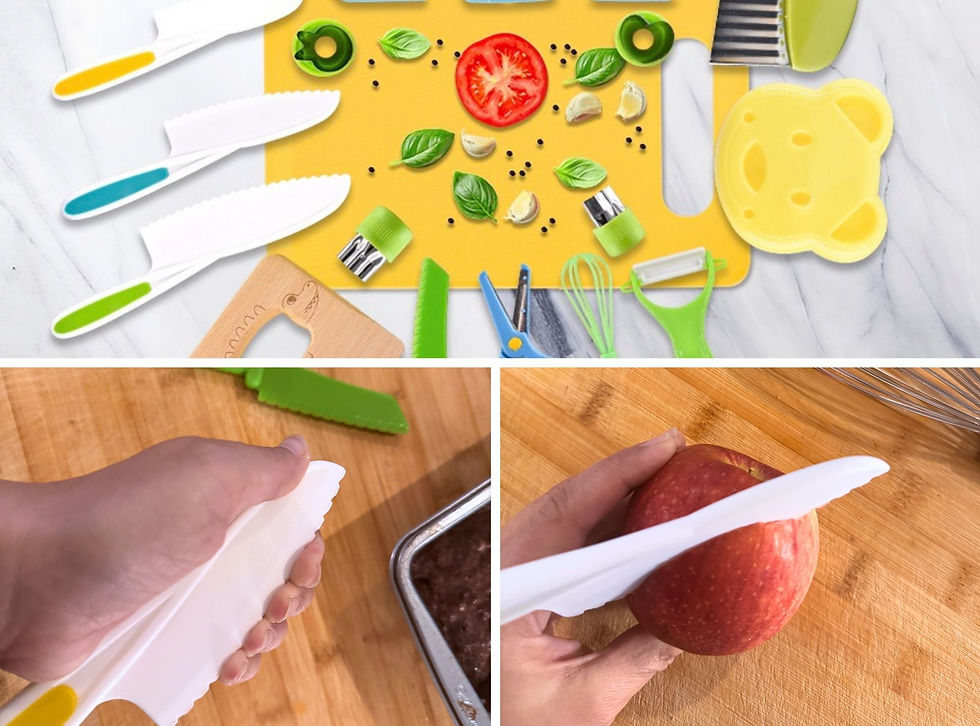
This is where a real measuring set, not a toy one, stops being a nice kitchen accessory and becomes the actual lesson plan. A kid-sized but genuinely accurate Kids' Baking Tool Set is the difference between a math lesson and a guessing game where the numbers don't mean anything. Skip this and you're not teaching fractions, you're just baking.
The hand-it-off stage: walk away, come back to dinner

Eventually, you hand your teen a recipe, walk away, and come back to a finished meal. Not supervised. Finished. The first time mine pulled this off, the food wasn't even the impressive part — it was watching a kid run a multi-step project alone, adjusting when something went sideways. That's executive function, and it's hard to teach any other way.
This stage is where the upgrade is worth it. A toy mixer breaks under real dough, a flimsy bowl walks off the counter mid-stir, and your kid loses the project, not because they couldn't do it, but because the equipment couldn't keep up. A real stand mixer Stand Mixer turns "kid cooking" into actual cooking, and you stop managing the mess and start watching them shine.
The four tools actually worth buying
You don't need a fully outfitted kid kitchen. A bowl and a spoon get a toddler through their first lesson. But if you skip the gear entirely, you're not running a leaner version of this activity, you're running a different, worse one — more supervision, more mess, less actual learning.
Which Tool Should You Buy First?
Chilld's Age | Buy First | Why we like it? |
2–4 | The participation barrier, gone. We like this one, because it is safe, sturdy, and adjustable. | |
5–8 | The life skills, made true. The knives are designed for beginners and felt much safer for my kids to learn with than standard kitchen knives. The tools feel real for the children, and they can really, cut, peel, etc. | |
8–12 | You wouldn't believe the motivation that comes with it. I like this one, because my son likes the fun design, and the matching hat. | |
13+ | The independence, made possible. I have the KitchenAid brand, and it has never let us down. Ours has handled years of bread dough, cookies, and weekend baking projects without giving us any trouble. |
If I could only buy one thing, it would be the kitchen helper stool. It's the product that unlocked everything else. Before we had one, helping meant holding a toddler while trying to cook. After we got one, my kids could actually participate. Every other tool became more useful because they could finally reach the counter.
If it's raining, it's too hot, or you're just out of better ideas, this is the one activity that works on a toddler and a teenager, on your best day and your most tired one. Grab whichever tool matches where your kid is right now, and the next dead afternoon stops being a problem.

Comments