Stuck Inside? Good. Here's How to Make It Actually Work.
- HumbleHomeschoolerMama
- Jun 15
- 7 min read
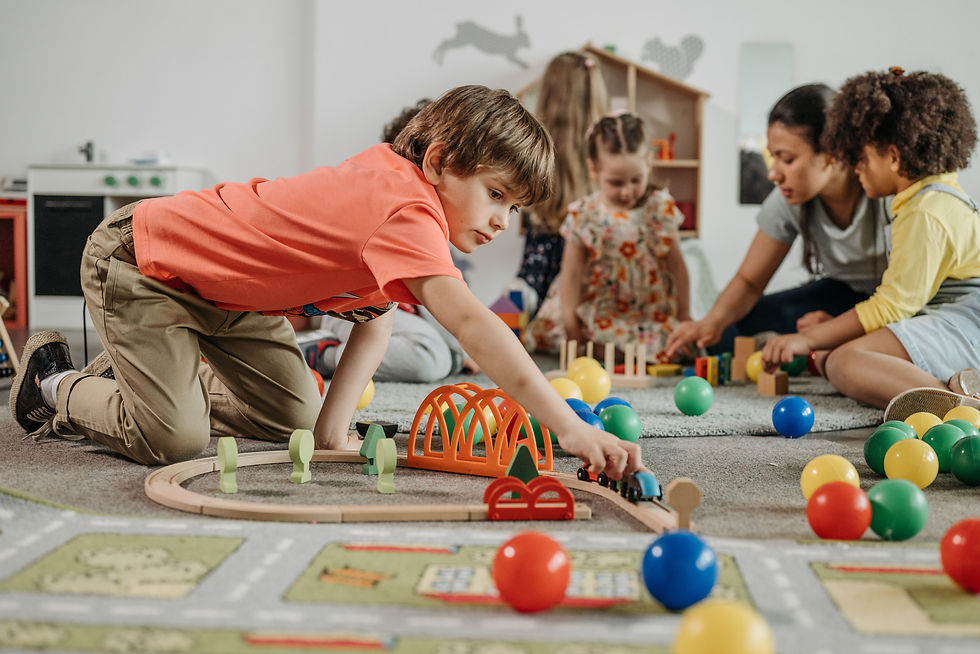
The forecast says rain all day. Or it's the kind of heat that turns the backyard into a frying pan by 9 a.m. Either way, everyone is home, everyone has energy, and the walls are already starting to feel close.
A day indoors with young kids doesn't have to mean survival mode. It can be genuinely good — slow, imaginative, cozy, even fun for you too. But only if you're a little prepared. The families who sail through rainy days aren't calmer or more patient; they just have a few ideas waiting in the wings before anyone has a chance to get bored.
Here's how to build a day that works — for them, and for you.
Set the tone early
The first twenty minutes decide the whole day. If you let things drift into screen-begging and restlessness before you've even had your coffee, you'll be fighting that current all morning.
So move intentionally, right from the start.
Put on music — not background noise, actual good music. Rearrange a pillow or two into something vaguely resembling a fort. Put out one activity before they've had the chance to announce they're bored. You're not running a summer camp, you're just creating a little momentum in the right direction.
Kids take their cues from you. If you start the day calm and ready, they'll follow.
The activities — for every kind of kid and every kind of energy
Build something big
Blanket forts, couch cushion castles, cardboard box constructions — these work at almost every age and they tend to absorb children for an impressive amount of time. The building itself is the activity; what happens inside it afterward is a bonus. Give them sheets, pillows, binder clips, a flashlight, and a stuffed animal population and they'll disappear for an hour.
Cardboard boxes deserve special mention. A single large box from a recent delivery can become a car, a rocket, a kitchen, a house — especially if you sit down for ten minutes with them to get it started, then step back and let imagination do the rest.
Your role: Light the spark, then let go. This is a genuine pocket of time for yourself once it gets going.
Sensory and hands-on play
Playdough, kinetic sand, water play at the sink with cups and funnels — these are the activities that create a near-meditative state in small children. Something about the texture and repetition of it is deeply satisfying, and it tends to hold attention longer than almost anything else.
Water play on a hot indoor day is particularly good: a shallow bin, some kitchen tools, a few small toys, and a towel on the floor. Is it a little messy? Yes. Will they be occupied and delighted for a solid stretch? Absolutely.
Homemade playdough made together is its own activity before it even gets played with — the measuring, the mixing, the watching it come together. Make a double batch and store the extra.
Your role: Set it up nearby, keep half an eye on things, and read something or drink your tea.
Art without a plan
Not a craft with steps and a finished product — just art. Big paper on the floor, all the crayons,
watercolors, and markers available at once. Let them paint their hand. Let them draw every animal they can think of. Let them fill a page entirely in one color just because they want to.
Resist the urge to guide toward a "project." The freedom of open-ended art is the point. A child who covers a blank page however they like is building something real — confidence, fine motor control, creative thinking — even if the result looks like a blue smear with a sun in the corner.
If you want a looser structure, give them a single prompt: "draw the best day you can imagine" or "make a map of a place that doesn't exist." Then let them go.
Your role: Sit with them for a bit, make your own drawing, then drift away. Leave the supplies out so they can return to it.
Get physical — burn it off
Energy needs somewhere to go. On a day when they can't run outside, you have to provide the outlet. This is worth ten minutes of your effort because the payoff — a calmer, more focused child afterward — is enormous.
Indoor ideas that actually work:
A dance party with a real playlist, not just nursery rhymes. Take requests. Be ridiculous about it.
An obstacle course through the living room: crawl under the coffee table, jump on the cushion, spin three times, hop to the rug. Write it on a piece of paper like an official course map and time them with your phone.
Balloon volleyball, with the rule that the balloon cannot touch the floor.
Pillow wrestling, with safe rules established upfront.
A "yoga for kids" video if you want something that builds in calm at the end — there are wonderful free ones online and children love the animal poses.
Your role: Join in, at least for a bit. It's good for you too, and they love having you in the chaos with them.
Immersive imaginative play
Set up a pretend scenario and let it run. A bakery with play food and a handwritten menu. A vet clinic with stuffed animals and a "medical kit" made from random objects. A post office where letters get written, folded, and delivered to different rooms. A restaurant where they take your order, disappear into the kitchen, and bring you back a plate of completely inedible food that you eat with great enthusiasm.
These scenarios don't need much from you beyond the initial setup. Kids will build and rebuild the world you hand them for a surprisingly long time.
Your role: Be the customer, the patient, the recipient of the letter. Show up fully for five minutes, then let them take over. Check back in periodically with genuine interest.
Cooking and baking together
A rainy or hot day is the best time to bake something — not because you necessarily need the thing baked, but because the process is so good. Measuring, pouring, stirring, waiting, smelling the kitchen change — it's multi-sensory, it's science, it's math, and it ends with something everyone gets to eat.
Simple things work best with young children: banana bread, muffins, cookies, homemade pizza dough. Give them real jobs — not made-up ones — and let them make a reasonable amount of mess.
This is also one of the rare activities where a toddler and an older child can be genuinely involved at the same time, each at their own level.
Your role: You're in this one together. But the cleanup, somehow, is always less bad than you expect.
Quiet time that isn't a screen
At some point in the day — usually after lunch, when everyone is a little full and a little flat — you want a wind-down that's genuinely restful. This is where books come in.
Not just reading to them (though that's gold), but building a culture of reading alongside them. Set everyone up with a book, find a comfortable spot, and read together quietly for a while. Older children who can read independently may surprise you with how long they'll stay with a book in the right conditions.
Audio books and read-alouds are also wonderful here — put one on while everyone does their own quiet thing. Drawing, puzzles, building — all of it pairs beautifully with a story playing in the background.
And puzzles themselves deserve a mention. A good puzzle on the coffee table, left partly done and available to return to, is something children and adults alike can drift in and out of all day.
Your role: This is your rest time too. Sit down. Read your own book. You've earned it.
The rhythm matters more than the plan
You don't need to schedule every hour. What you need is a rough rhythm: something active,
something quiet. Something together, something independent. Something messy, something contained.
Watch for the signs that an activity has run its course — restlessness, squabbling, looking around for something new — and be ready to transition before it tips into chaos. You don't need to have the next thing perfectly prepared; just a suggestion is usually enough to redirect the energy.
And build in a real break for yourself. Not scrolling-on-the-couch, but actually doing something you find restoring — even if it's just ten minutes with a good cup of tea and no one talking to you. A parent who has had a moment to breathe is a better parent for the rest of the day. That's not selfish; it's practical.
On the hard moments
There will be a moment — probably around 3 p.m., when the day has gone on long and everyone is tired but too wired to rest — when it feels like too much. Someone will whine, or cry, or kick something. You will feel a flash of something between frustration and defeat.
This is normal. It's part of an indoor day with young children, the same way a traffic jam is part of a long road trip. It doesn't mean the day was bad. It means it was real.
The best thing to do in that moment is almost always the simplest: go outside for five minutes if the weather allows even briefly, or just change the room, change the activity, change the energy. Sometimes all anyone needs is a glass of water and a small snack and a hug, and the rest of the afternoon opens right back up.
It's worth being ready
The families who genuinely enjoy indoor days didn't stumble into it. They built a small toolkit: a few go-to activities, a rough sense of rhythm, a willingness to get on the floor and be part of things for a while.
The kids don't need a full itinerary or a Pinterest-perfect setup. They need you present, a little bit playful, and reasonably prepared for the chaos that comes with being young and full of life and stuck inside on a rainy Tuesday.
That's entirely doable. And occasionally — genuinely, surprisingly — it ends up being one of the best days you've had in a while.


Comments