The 5 Best Microscopes for Homeschool Science (Plus 25 Things to Put Under the Lens)
- HumbleHomeschoolerMama
- Jun 28
- 10 min read
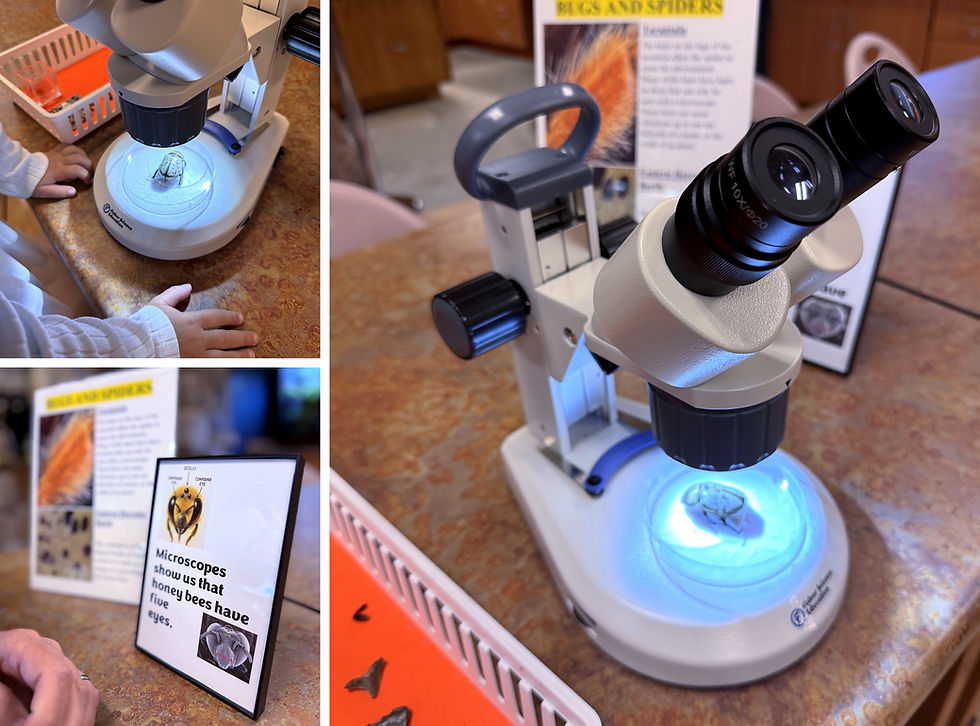
The first time my kids saw a drop of pond water turn into an entire universe of wriggling, swimming creatures, I watched something click into place that no worksheet had ever managed. Suddenly cells weren't a diagram in a textbook — they were real, and my kids wanted to know everything about them.
That's the thing about a microscope that no other piece of science equipment quite replicates. You can read about cell walls, explain bacteria, describe pollen grains a hundred different ways — but the moment a child looks through an eyepiece and sees it themselves, biology stops being abstract. It becomes something they discovered, with their own eyes, in their own kitchen.
I went looking for a real microscope after our cheap toy-store version produced nothing but blurry, useless smudges no matter what we put under it. That experience taught me the most important lesson before you buy anything in this category: plastic optics will ruin the magic before it even starts. A "real" microscope, even an affordable one, makes all the difference between a tool your kids actually use and one that ends up in the closet within a month.
Below is the full lineup — five real, Amazon-available microscopes, organized by exactly where your child is in their science journey, plus 25 bonus specimen ideas at the end so you're never staring at the microscope wondering what to actually look at.
A quick, honest note before we dive in: this post contains affiliate links. If you click through and make a purchase, I may earn a small commission at no extra cost to you. I only recommend equipment that's genuinely well-reviewed and well-suited to real homeschool use.
What Actually Matters When Choosing a Homeschool Microscope
A few things worth understanding before the list, because "best microscope" depends heavily on your child's age and what you want to study:
Glass optics, not plastic. This is the single biggest quality marker in this entire category. Plastic lenses, common in toy-store microscopes, produce genuinely blurry, frustrating images no matter how good the rest of the microscope looks. Always confirm glass optics before buying.
Compound vs. stereo vs. digital — they do different jobs. A compound microscope (the classic kind, looking down at a thin slide with light shining through it) is built for cells, bacteria, and anything translucent. A stereo microscope looks at solid 3D objects — bugs, rocks, fabric — without needing a prepared slide. A digital microscope connects to a screen or phone, which is wonderful for sharing discoveries or documenting a science notebook entry.
Magnification range matters less than people think. A huge magnification number sounds impressive, but most meaningful homeschool biology happens in the 100x–400x range. Extremely high magnification (1500x, 2000x) is mostly useful for cell-level detail and often produces a dimmer, harder-to-focus image for a beginner.
Metal body over plastic body. A microscope gets bumped, dropped, and handed between siblings. A sturdy metal frame survives a homeschool childhood; an all-plastic body usually doesn't.
A real focus knob system (coarse and fine adjustment) matters more than flashy accessories. This is what actually lets a child bring a specimen into sharp focus, and it's worth prioritizing over a big pile of included extras.
With that lens (pun fully intended), here's the lineup — starting with the best entry point and moving up through serious, lasting equipment.
Best First Microscope: National Geographic Dual LED Kids Microscope

What it is: A genuinely well-reviewed beginner microscope kit (consistently rated among the top kids' microscopes available), with dual LED lighting for both prepared slides and solid 3D objects, up to 400x magnification, and a full set of prepared and blank slides included.
The Pros:
Dual lighting system lets kids switch between viewing transparent slides (light from below) and solid objects like coins, fabric, or rocks (light from above) — essentially two microscope experiences in one machine.
Comes ready to use immediately with prepared slides included, so the very first time your child opens the box, they can see something fascinating without any prep work.
Genuinely well-loved by reviewers with a strong overall rating across thousands of households — a reassuring sign for a brand most parents already trust.
Approachable for younger kids (around ages 6–10) without overwhelming complexity.
The Cons:
400x is a lower ceiling than the compound microscopes further down this list — wonderful for exploration, but it won't show fine cellular detail the way a true compound scope can.
Lighter-duty construction than a full metal-body compound microscope, so it's best suited to a gentler beginner stage rather than years of heavy daily use.
Why I recommend it: If you're introducing microscopy for the very first time, especially to a younger child, this is the gentlest, most successful starting point I've found — it removes every barrier to that first "wow" moment.
🔬 If this is your family's very first microscope, start here. It's built to make that first discovery moment as easy and exciting as possible. 👉 Check current price on Amazon
Best for Real Glass Optics on a Budget: Omano Juniorscope
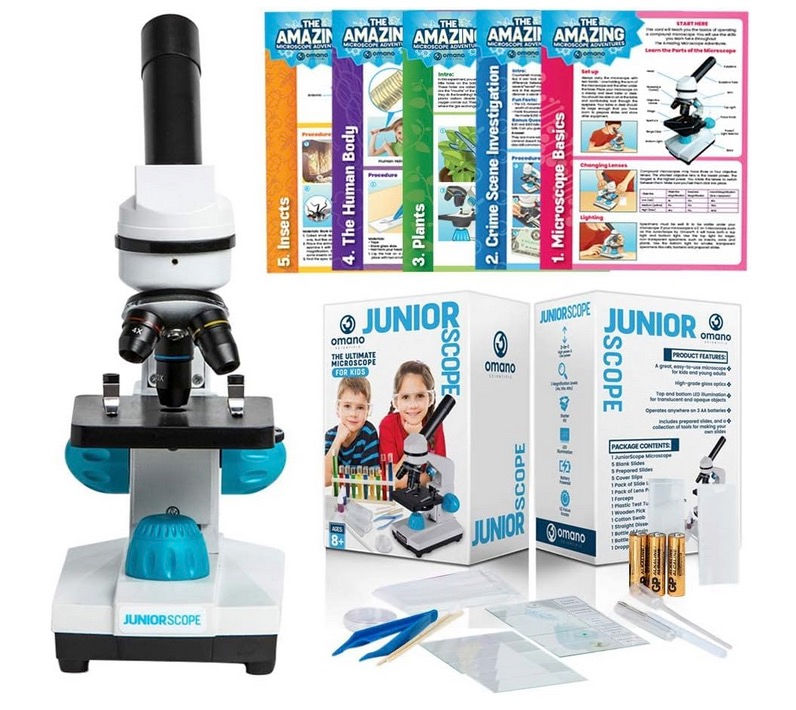
What it is: A kids' compound microscope built around genuine glass objective lenses (rather than the plastic optics found in most toy-tier microscopes), with dual upper-and-lower LED lighting and a lifetime warranty.
The Pros:
Real glass optics make a noticeable, immediate difference in image clarity compared to plastic-lens competitors at a similar price — this is the upgrade that actually matters most.
Dual LED lighting (upper light for opaque objects like coins and fabric, lower light for prepared slides) gives genuine versatility in one machine.
Comprehensive accessory kit goes beyond basic slides — forceps, a dropper, test tube, and petri dish let kids practice real, hands-on lab technique, not just look-and-done observation.
Lifetime warranty signals real manufacturer confidence in long-term build quality.
Included experiment book provides structured activities that teach the scientific method, not just "look and move on."
The Cons:
Magnification claims should be taken with realistic expectations — don't expect crystal-clear true 2000x clarity at this price point; the sweet spot is more moderate magnification with genuinely clear images.
Best suited to ages 8 and up — younger children may find the setup and technique a bit much.
Why I recommend it: This is the microscope I'd point to if you want the single biggest jump in real image quality without jumping all the way to a full compound lab microscope — the glass optics alone justify the step up from a pure beginner kit.
🔍 If blurry images have been the problem with a previous microscope, this is the upgrade that fixes exactly that — real glass, real clarity. 👉 See it on Amazon
Best All-in-One Starter Kit: AmScope 120X–1200X Beginner Microscope STEM Kit
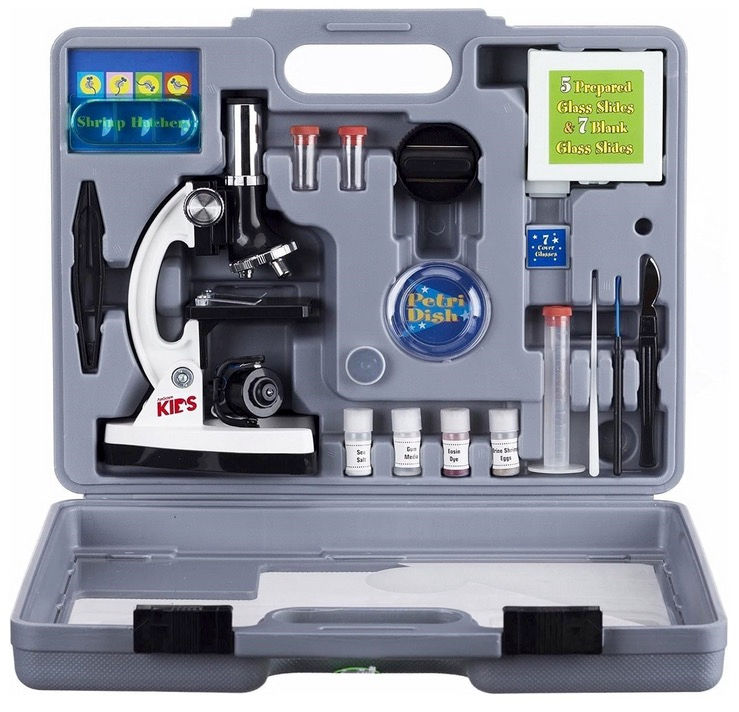
What it is: A genuinely complete 52-piece compound microscope kit with a sturdy metal frame, six magnification settings (120x up to 1200x), built-in LED and mirror illumination, a rotating color filter wheel, and a full accessory set including a brine shrimp hatchery experiment.
The Pros:
Real metal-body construction, which holds up far better to repeated use and accidental bumps than an all-plastic frame.
Six magnification settings give real room to grow — start at lower power for ease, move up to 1200x as your child's skills develop.
The accessory list is genuinely impressive for the price — prepared slides, blank slides, a petri dish, tweezers, a scalpel, collecting vials, and the brine shrimp hatchery experiment alone is worth the price of admission for the "watch them hatch and grow" wonder factor.
Color filter wheel lets kids experiment with contrast and lighting, adding a layer of real scientific exploration beyond basic viewing.
A trusted, established microscopy brand — AmScope has built a long-standing reputation specifically in the educational and laboratory microscope space.
The Cons:
Monocular (single eyepiece) viewing head, which some kids adjust to instantly and others find takes a bit of practice compared to binocular viewing.
Plastic slides included in the base kit rather than glass — perfectly fine for practicing technique, though you may want to add glass prepared slides for the clearest possible images down the line.
Why I recommend it: If you want one complete, ready-to-go kit that will genuinely carry your child from "first real microscope" through several years of serious exploration, this is the best balance of quality, accessories, and value I found.
🧪 If you want a single, complete kit that will grow with your child for years, this is the one I'd put at the top of your cart. 👉 Check the current price on Amazon
Best for Documenting Discoveries: Digital Microscope with Phone/Computer Connection
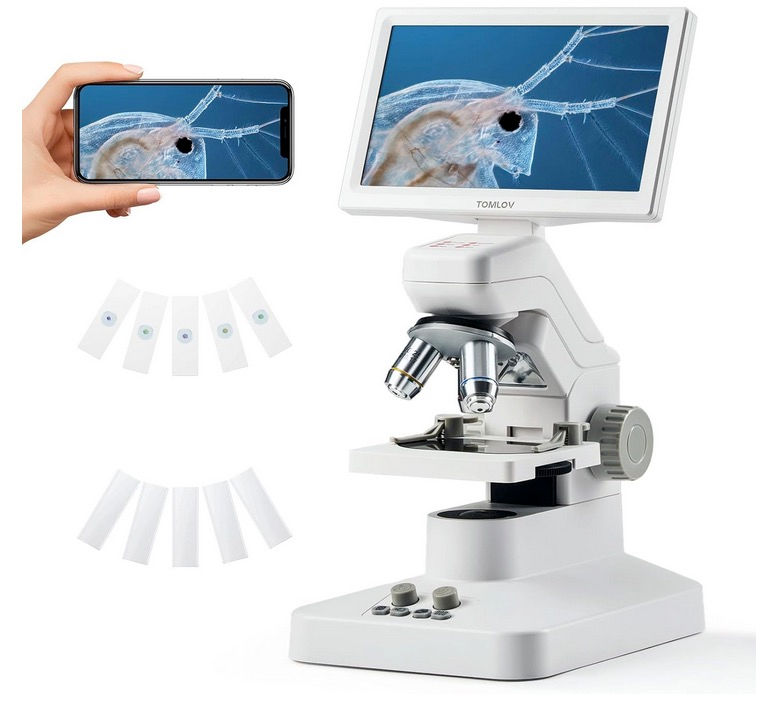
What it is: A category of microscope, widely available from brands like Celestron, AmScope, and others, that connects directly to a phone, tablet, or computer screen instead of (or in addition to) a traditional eyepiece, letting your child photograph and record what they find.
The Pros:
Turns every discovery into something shareable and saveable — a real photo of pollen, an insect leg, or a leaf cross-section becomes part of a homeschool science notebook or portfolio, not just a fleeting glance.
Group-friendly — multiple kids (or a full co-op) can look at the screen together instead of taking turns squinting through a single eyepiece.
Genuinely engaging for tech-curious kids who respond more to a screen-based experience than a traditional eyepiece.
Great for narration and portfolio work — older kids can write up and illustrate findings using their own captured images.
The Cons:
Image quality varies significantly by model and price — this is a category where it's worth reading recent reviews carefully before choosing a specific unit, since quality ranges widely.
Software and connectivity can be a learning curve, especially on older devices or if the software favors one operating system over another.
Less "hands and eye" tactile science experience than a traditional eyepiece microscope — some homeschool philosophies (particularly those that emphasize direct sensory observation) may prefer a traditional scope as the primary tool, with a digital model as a fun supplement.
Why I recommend it: If documentation, portfolio-building, or group learning matters in your homeschool, a digital microscope adds a dimension that traditional eyepiece models simply can't — it's the difference between a moment and a memory.
📸 Want your child's discoveries to end up in a science notebook, not just in their memory? A digital microscope is built exactly for that. 👉 Browse options on Amazon
Best Portable Pick: Carson MicroBrite Plus Pocket Microscope
What it is: A genuinely pocket-sized, handheld microscope (60x–120x magnification) with built-in LED and UV lighting, built for on-the-go exploration rather than slide-based lab work.
The Pros:
Truly portable — small enough to toss in a backpack, nature-walk bag, or even a coat pocket, so it goes wherever your homeschool day takes you.
No slides or setup required — just hold it directly against (or near) whatever you want to examine: bark, leaves, fabric, rocks, insects in the wild.
Built-in LED and UV light adds a genuinely fun extra layer — UV light reveals certain minerals, fibers, and even some insect markings that are invisible under normal light.
An excellent companion to a full compound microscope, not a replacement — this is the "grab and go" tool for spontaneous nature-study moments a bigger microscope can't handle.
Inexpensive enough to be a low-risk add-on to a homeschool science toolkit.
The Cons:
Lower magnification ceiling than a compound microscope, so it's not a substitute for cell-level or slide-based study.
Best as a second microscope, not the only one in your homeschool — it shines for field exploration but won't replace the depth of a real compound scope at home.
Why I recommend it: If nature study, hikes, or outdoor exploration are part of your homeschool rhythm, this is the microscope that actually comes along for the walk — and it turns "let's look closer at that" into something you can do on the spot, every single time.
🌿 If nature walks are already part of your homeschool, this pocket-sized companion turns every walk into a potential discovery. 👉 See it on Amazon
Quick Comparison: Which One Is Actually Right for You?
Microscope | Best For | Type | Magnification |
First-ever microscope, younger kids | Compound (kids) | Up to 400x | |
Best image clarity on a budget | Compound (kids) | Moderate, glass optics | |
AmScope 120X-1200X STEM Kit (my top pick) | Complete, grows with your child | Compound | 120x–1200x |
Digital microscope (various) | Documenting & sharing discoveries | Digital | Varies by model |
Nature walks & field exploration | Pocket/handheld | 60x–120x |
If you only remember one thing from this whole post, let it be this: a microscope with real glass optics and a sturdy frame will get used for years; a cheap plastic one usually gets used once. Spend your money on quality where it actually matters — the lens and the frame — rather than on flashy extras.
Bonus: 25 Things to Put Under the Microscope (So You're Never Stuck Wondering What to Look At)
Half the battle with a new microscope is knowing what to actually examine once the "wow" of day one wears off. Here's a running list to keep nearby:
From the kitchen:
A single grain of table salt vs. sea salt (the crystal shapes are completely different)
A thin slice of onion skin (a classic first cell-structure lesson)
Yeast in warm water (watch it become active)
A strand of cooked vs. raw spaghetti
Sugar crystals
A drop of milk
Coffee grounds
From the backyard or a nature walk:
8. Pond water (this is the one that started it all for us — endlessly fascinating)
9. A flower petal, especially translucent ones like a tulip
10. Pollen from a flower
11. A blade of grass
12. Tree bark texture
13. A feather (the way the barbs interlock is genuinely beautiful magnified)
14. A snail shell
15. An ant or other small insect (after a humane, brief observation)
16. A leaf's underside (look for stomata and vein structure)
17. Soil and dirt samples (you'll find more than you expect)
Around the house:
18. Different fabric threads (cotton vs. wool vs. synthetic look completely different)
19. A strand of hair (yours vs. a sibling's vs. a pet's)
20. A fingernail clipping
21. Dust (genuinely eye-opening, in a good way)
22. Newspaper or magazine print (you'll see the dot pattern that makes up the image) 23. A piece of paper currency (great for spotting security features)
Science-kit classics:
24. Brine shrimp eggs and larvae, if your kit includes a hatchery (this is a multi-day project kids absolutely love watching unfold)
25. Prepared slides of blood cells, bacteria, or plant cells (included in most kits, and worth revisiting as your child's understanding deepens)
Print this list out, stick it near your microscope, and you'll never have a "what do we even look at" moment again.
My Honest Final Take
A microscope is one of those rare homeschool purchases that genuinely earns its price in wonder alone. Watching a child's face the moment a smudge of pond water resolves into dozens of swimming creatures is worth more than any worksheet could ever teach about cells and microorganisms.
Whichever option you choose from this list, match it to where your child actually is right now — a gentle, ready-to-go beginner kit for a first-timer, or a complete compound microscope kit if you're ready to invest in years of real biology study. Either way, the wonder is the same.
Disclosure: This post contains affiliate links. As an Amazon Associate, I earn a small commission from qualifying purchases made through these links, at no additional cost to you. All recommendations are based on thorough research and verified owner feedback.

Comments