The Profound Power of Read-Alouds: Why Your Voice Is the Most Important Reading Tool in Your Homeschool
- HumbleHomeschoolerMama
- Jun 14
- 7 min read
Updated: Jun 17
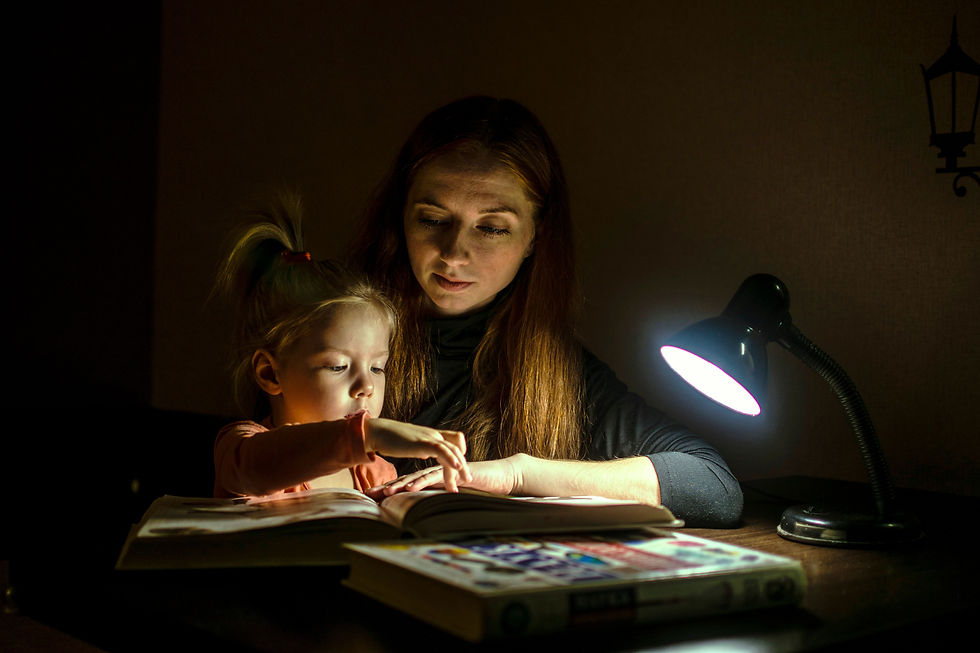
Before your child can hold a book, before they can sound out a single letter, before phonics charts and leveled readers ever enter the picture — there is your voice. And it turns out, your voice reading aloud to your child may be the single most powerful literacy and character-shaping tool in your entire homeschool.
Read-alouds are not a warm-up act to "real" reading. They are not something you graduate away from once your child can read independently. For homeschooling families, the daily read-aloud is a cornerstone — of language development, of relationship, of imagination, and of something deeper still: the formation of a child's inner life.
More Than a Story: What Read-Alouds Actually Do
They Build Vocabulary Far Beyond a Child's Reading Level
Here is a remarkable fact: a child's listening vocabulary develops years ahead of their reading vocabulary. A five-year-old who cannot yet read can hear and understand words like "luminous," "reluctant," or "melancholy" in the context of a beautifully written story. That understanding lodges quietly in the mind, and when those words appear in print years later, they feel like old friends.
This is why read-alouds should not be limited to books your child could read independently. Reading above their level — books with richer vocabulary, more complex sentences, and layered meaning — is precisely the point. You are filling the well long before they draw from it themselves.
They Build the Blueprint for What Good Writing Sounds Like
Children who are read to extensively develop an intuitive sense for language rhythm, sentence variety, and narrative structure. They absorb, without any formal instruction, how a story builds tension, how a character is revealed through dialogue, how a well-placed detail can make a scene come alive.
This inner blueprint quietly shapes not only how they read later, but how they write and speak. The homeschooled child who has been immersed in great literature from toddlerhood carries those patterns inside them. You will hear it in their storytelling, their essays, their conversation.
They Create a Shared Inner World
Every family that reads aloud together builds something invisible but lasting: a shared imaginative world. You have all stood in the Hundred Acre Wood together. You have crossed the Atlantic with Mafatu in Call It Courage. You have laughed at the same jokes and worried over the same characters and cried — maybe — at the same passages.
This shared world becomes part of your family's vocabulary, its shorthand, its culture. "That was very Eeyore of you," one sibling says to another, and everyone understands. These are the threads that bind.
The Connection That Cannot Be Replicated
No app, no audiobook, no classroom can offer what a parent's voice can. When you read aloud to your child, several things happen at once that technology simply cannot replicate:
Physical closeness. The child tucked beside you, or curled in your lap, or lying on the rug at your feet — that proximity is part of the experience. Reading aloud is an act of embodied togetherness. The safety of your presence wraps around the story.
Responsive reading. You can pause when you see confusion on your child's face. You can re-read a funny line twice because they're still laughing. You can lower your voice to a near-whisper at the frightening part, then glance at each other with raised eyebrows when it resolves. You are a living, responsive narrator — and that interactivity deepens comprehension and engagement in ways a recording never can.
The message underneath the story. When you choose to sit down every day and read to your child, you are communicating something before you open the book: This matters. You matter. Stories matter. The daily read-aloud is an act of love made ritual. Children feel this. It forms their association with books and reading at the deepest level.
This is why homeschooling families who prioritize read-alouds so often raise children who love to read. The love doesn't come primarily from phonics instruction or reading incentive programs. It comes from this: books were associated, from the very beginning, with warmth and closeness and a parent's full attention.
The Case for Living Books — And Why Not All Books Are Created Equal
Here is where many well-meaning parents unknowingly shortchange the read-aloud experience: they choose the wrong books.
Not all books that are marketed to children are worth your child's time and attention. And in the homeschooling world, the term "living books" — popularized by the 19th-century educator Charlotte Mason — captures an important distinction.
What Is a Living Book?
A living book is one written with genuine passion and care by an author who truly knows and loves their subject. It has real ideas, real beauty, and real heart. It speaks to the child as a whole person — engaging their imagination, their emotions, and their sense of wonder — rather than merely conveying information or aiming for entertainment.
Living books are the opposite of what Charlotte Mason called "twaddle" — flat, condescending, formulaic writing that underestimates children and offers them nothing to grow on.
The difference is not always about complexity. Some of the most "living" books for young children are also beautifully simple. Goodnight Moon is simple. The Velveteen Rabbit is simple. But both are alive in a way that a hastily licensed tie-in book never is.
Ask yourself: does this book feel like it was written by someone who had something to say? Does it respect my child's intelligence and imagination? Is the language itself worth hearing? If yes, you likely have a living book on your hands.
The Importance of Beautiful Illustrations: Forming Taste, Shaping the Soul
This point deserves its own space, because it is underappreciated: the illustrations in a child's books are forming their aesthetic sensibility. Long before your child can articulate what is beautiful, they are learning to feel it — or not — based on what they are given to look at.
A child who grows up with watery, careless, or garish illustrations is absorbing a low standard for visual beauty. A child who grows up with the illustrations of Jessie Willcox Smith, Arthur Rackham, Tasha Tudor, Barbara Cooney, or Lisbeth Zwerger is being quietly educated in what art can do — in light, in tenderness, in the power of a single image to hold an entire emotional world.
This is not elitism. It is stewardship.
Illustrations That Form Good Values
The images in a child's books also communicate values — about beauty, about human dignity, about what is worth depicting and how. An illustration showing a mother and child in warm lamplight, a child helping an elderly neighbor, a small creature being treated with gentleness — these are images that lodge in a child's moral imagination and quietly shape their sense of how people ought to treat one another.
By contrast, illustrations that glorify chaos, cruelty, or ugliness for shock value or easy laughs are leaving a different kind of imprint. Children are profoundly impressionable, and the images they absorb in their earliest years become part of the furniture of their inner world.
Choosing books with illustrations of genuine beauty — whether in a classical, folk, or whimsical style — is one of the quietest and most profound gifts you can give your child. You are cultivating their taste. You are shaping their sense of the beautiful. You are furnishing their soul with images worth keeping.
Practical Guide: Building a Read-Aloud Life in Your Homeschool
Make It Daily and Non-Negotiable
The read-aloud should be as fixed a part of your homeschool day as breakfast. Not "if we have time." Not "as a reward." Daily, protected, expected. Even twenty minutes is transformative when done consistently. Many homeschooling families read aloud for an hour or more across the day — a picture book at morning circle, a chapter book after lunch, a poem before bed.
Choose Deliberately
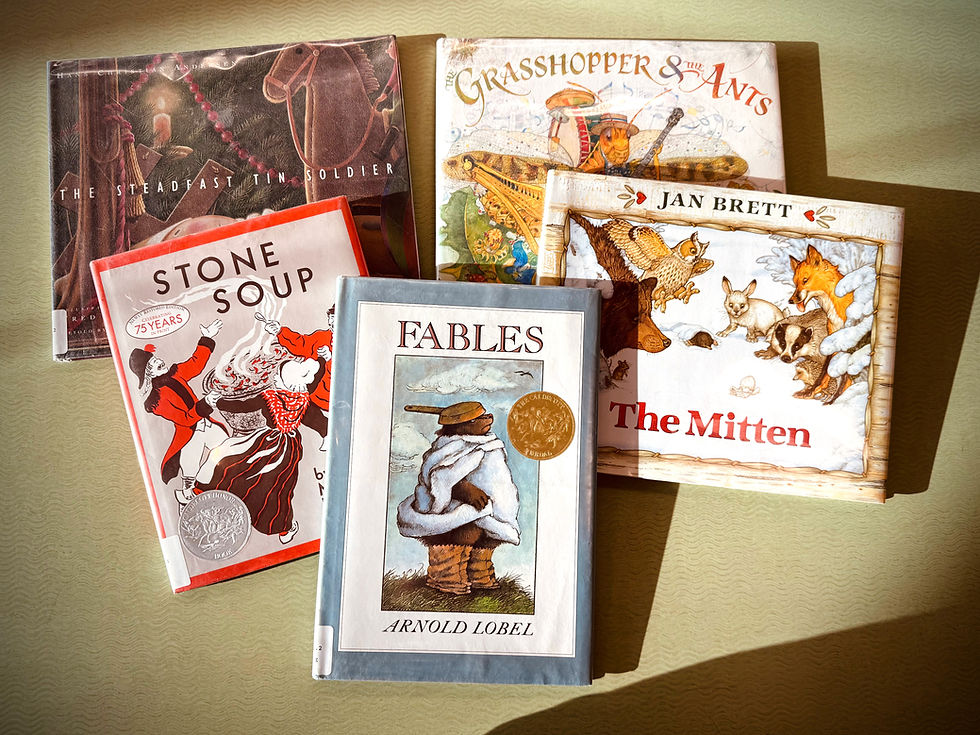
Browse lists of award-winning children's literature: the Caldecott Medal (for illustration excellence), the Newbery Medal, the Charlotte Mason book lists, and the Ambleside Online curriculum reading lists are all excellent places to start. Ask your local librarian for their personal favorites — this resource is consistently underused and deeply valuable.
Avoid books primarily driven by licensed characters, film tie-ins, or entertainment franchises. Not all of these are bad, but most are twaddle. Be selective. Your child's reading hours are finite and precious.
Don't Stop When They Can Read Independently
This is a common and costly mistake. Read-alouds should continue well into middle childhood and even into the teen years. A parent reading The Hobbit or Little Women or Treasure Island aloud to a ten-year-old is offering something entirely different from what the child experiences reading those same books alone. The shared experience, the emotional processing together, the discussions that arise — these are irreplaceable.
Read With Expression — But Don't Perform
You don't need to be a voice actor. Children are remarkably forgiving of imperfect reading. What they need is your genuine engagement with the text: a slight change in voice for different characters, a slowed pace at a tense moment, a smile when something is funny. Let the book actually affect you as you read it. That authenticity is far more powerful than theatrics.
Let There Be Silence After
After a moving or complex passage, resist the impulse to immediately quiz your child or launch into discussion. Sometimes the most powerful response is to simply sit in silence for a moment — letting the words settle. A child who sits quietly after a beautiful passage is not disengaged; they are digesting something real.
Discussion can come. But first, let the living book do its quiet work.
A Selection of Beloved Read-Aloud Books, Organized by Age
For the youngest children (ages 2–5):
Goodnight Moon — Margaret Wise Brown
Make Way for Ducklings — Robert McCloskey
Blueberries for Sal — Robert McCloskey
The Story of Ferdinand — Munro Leaf
Winnie-the-Pooh — A.A. Milne
Curious George — Margret Rey and H. A. Rey
The Classic Adventures Of Paddington Bear — Michael Bond
For early elementary (ages 5–8):
The Courage of Sarah Noble — Alice Dalgliesh
Little House in the Big Woods — Laura Ingalls Wilder
Farmer Boy — Laura Ingalls Wilder
The Boxcar Children — Gertrude Chandler Warner
My Father's Dragon — Ruth Stiles Gannett
Charlotte's Web — E.B. White
For middle childhood (ages 8–12):
The Phantom Tollbooth — Norton Juster
The Witch of Blackbird Pond — Elizabeth George Speare
Call It Courage — Armstrong Sperry
The Hobbit — J.R.R. Tolkien
Little Women — Louisa May Alcott
A Tree Grows in Brooklyn — Betty Smith
The Inheritance You Are Building
There is a phrase sometimes used in classical education circles: the Great Conversation — the idea that great literature puts us in dialogue with the best ideas and the deepest human experiences across centuries.
When you read aloud to your child, you are handing them a ticket to that conversation. You are saying: this is part of your inheritance. The beauty and wisdom and sorrow and delight that human beings have poured into great books across generations — it belongs to you.
And it all starts with you, your child, and your voice.
That is not a small thing. It is, in fact, one of the most important things you will ever do.

Comments