5 Classic Stories for Kids Ages 5-8 That Shaped My Childhood — and Now Shape My Son's
- HumbleHomeschoolerMama
- 6 days ago
- 8 min read
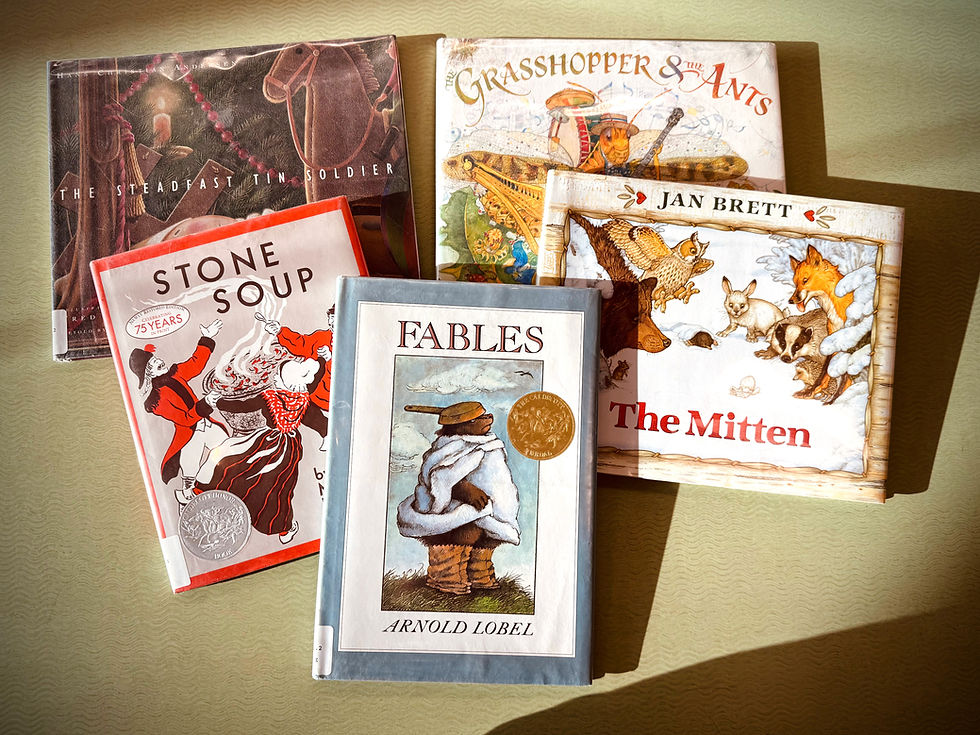
I grew up in Eastern Europe, and stories were a big deal where I come from.
Not in a performative way. Not as a scheduled activity or a literacy exercise. Stories were just part of life. You heard them over and over, from parents, from grandparents, around the table, at bedtime, on long afternoons when there was nothing else to do. The same stories, told again and again, until they became part of who you were.
The tin soldier who loved the paper dancer. The soup made from a stone. The animals who couldn't quite get along. The mitten in the snow. These weren't just bedtime stories.
They were the building blocks of how we understood the world — what it meant to be brave, to be generous, to be patient, to keep going even when things were hard.
When I moved to America and started building our homeschool library, one of the first things I went looking for was these stories. My son deserves to grow up on the same classics I did. And I was genuinely happy — relieved, honestly — to find beautiful editions of them right here on Amazon.
I want to share five of them with you today. These are not a complete list by any means. But they are a starting point. A real one.
Why Classic Stories Still Matter (Maybe More Than Ever)
I know we live in a world of new books, new characters, new formats. And a lot of those are wonderful. But there's something that classic folk tales and fables do that newer stories often don't, and I think it's worth naming before we get into the list.
Classic stories teach values without lecturing. A child doesn't feel taught when they hear about the grasshopper who sang all summer and then had nothing. They just feel the story. And somewhere in there, without a single worksheet or discussion prompt, they understand something true about how the world works. About effort. About consequences. About kindness and courage and what it actually costs to be good.
Where I'm from, we grew up on stories like these the way some kids here grow up on Dr. Seuss. They were everywhere. And the adults who read them to us didn't do it to check a box. They did it because they believed the stories mattered. Because their parents had read the same ones to them.
That's what I'm offering you here. Not a curriculum resource. A legacy.
Read these to your kids. Read them more than once. Let the stories get into them the way they got into you — slowly, quietly, over time. These are the kinds of books your children will one day read to their own children. That's not nothing. That's everything.
👉 All five books are on Amazon — I'll link each one as we go so you can grab them easily.
The 5 Classic Stories I Keep Coming Back To

If there is one Hans Christian Andersen story that has stayed with me my whole life, it is this one. The little tin soldier with one leg who loves the paper ballerina with his whole heart — who faces every terrible thing the world throws at him without once complaining, without once giving up — and who never, not once, stops being who he is.
This is a story about steadfastness. About dignity. About loving something beautiful even when you know you can't have it, and being noble about it anyway.
Andersen wrote for children, but he also wrote for adults who forgot what it felt like to hope quietly. This story is both.
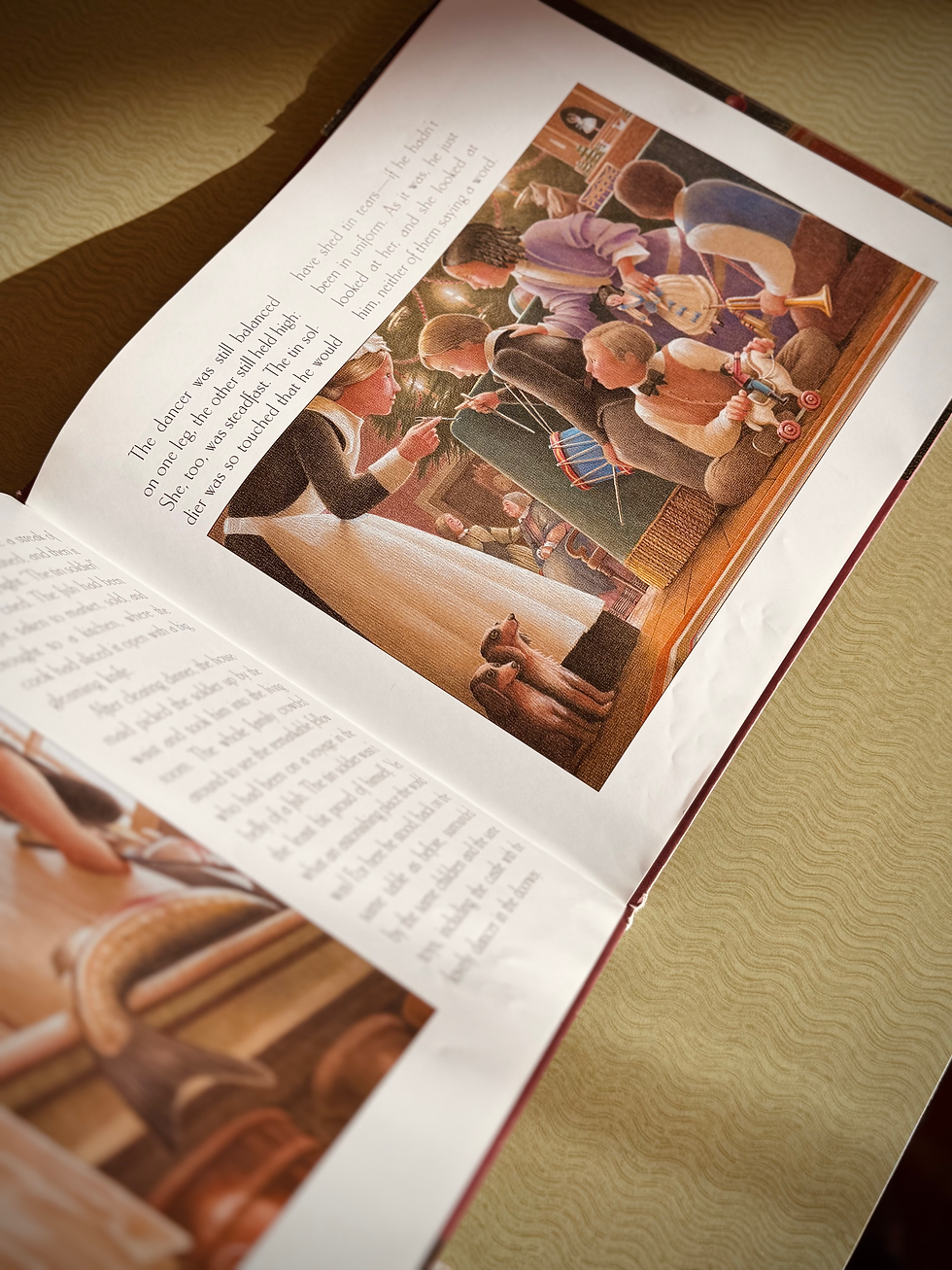
The edition adapted by Tor Seidler with illustrations by Fred Marcellino is one of the most beautiful physical books I have ever held. The illustrations are lush and warm and somehow both old-fashioned and timeless. I read this to my son and found myself getting a little emotional, which I was not expecting. He sat completely still the whole way through. That's how you know a story has done its job.
This is one of the first books I'd recommend for any child's home library. It belongs there the way a classic belongs on a shelf — permanently. 👉 Find it on Amazon

Oh, Stone Soup. This one made me so happy to find here.
Where I'm from, a version of this story exists. The details shift depending on who tells it — sometimes it's soldiers, sometimes travelers, sometimes a clever peasant — but the heart of it is always the same. Someone arrives with nothing. Through a little cleverness and a lot of warmth, they bring an entire community together. What started as a trick becomes a genuine feast. What started as suspicion becomes generosity.
That's the magic of this story. It doesn't moralize. It just shows you what happens when people stop holding back and start sharing what they have. The lesson lands in your chest, not your head.

Marcia Brown's version is a Caldecott Honor winner and it deserves every bit of that recognition. The illustrations have a folk art quality that feels exactly right for a story like this — earthy, lively, warm. The kind of book that looks like it came from a grandmother's shelf.
Read this one with your kids during a meal if you can. Trust me.

Aesop and La Fontaine were the two fabulists I grew up on. Their fables were everywhere — in schoolbooks, in bedtime stories, in the things adults said when they were trying to teach you something without making it obvious they were teaching you something. The fox and the grapes. The tortoise and the hare. The ant and the grasshopper.
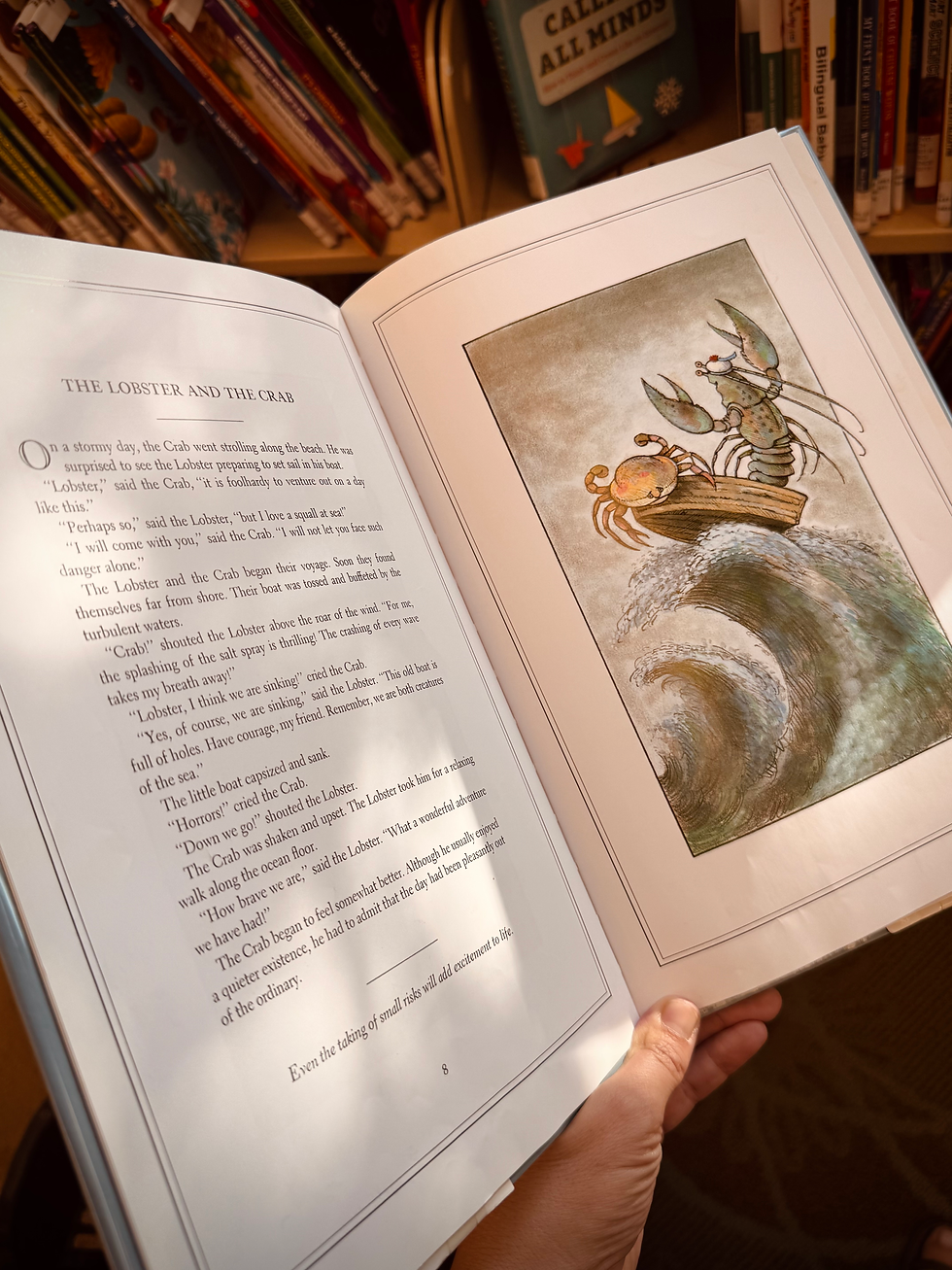
Arnold Lobel's Fables is not a straight retelling of Aesop — it's his own original fables written in the same spirit — and it is absolutely wonderful. It won the Caldecott Medal for a reason. These are short, sharp little stories with a lot of warmth and a lot of wit, each one landing a moral without ever feeling preachy. The illustrations are charming and expressive in exactly the way a fable illustration should be.
This is the book I reach for when I want to talk to my son about something without making it A Conversation. We just read a fable together, and somehow the thing I needed him to understand gets communicated through a story about a crocodile or a mouse, and it sticks in a way that a direct talk never would.
Fables belong in every home library. This edition is a joy.
👉 If you only add one book to your shelf from this post, consider making it this one. See it on Amazon

The Mitten is a Ukrainian folk tale. I want to say that first, because it matters to me personally. This story comes from my part of the world, and finding a beautiful American edition of it felt like finding a piece of home.
The story is simple and perfect: a boy drops his white mitten in the snow. One by one, animals find it and crawl inside — a mole, a rabbit, a hedgehog, a fox, a bear — each one bigger than the last, the mitten stretching impossibly to hold them all — until finally something happens that makes the whole thing come undone.
It sounds silly. It is also somehow deeply satisfying in the way only the best folk tales are.

There is a rhythm to it, a cumulative structure that children find deeply pleasing, and Jan Brett's illustrations are — I don't have another word for it — extraordinary. The detail in every page, the little side panels that show you what's coming next, the textures and the winter light. This is a book you want to own just to look at it.
It's also a book from my grandmother's world, and reading it to my son feels like a small act of preservation. Like passing something forward that deserves to keep going.

The grasshopper and the ants is one of the oldest fables in the world. Aesop told it. La Fontaine told it in French verse. It has been told in every language, in every century, and it still lands. Every time.
The grasshopper sings and plays all summer while the ants work. When winter comes, the grasshopper has nothing. The ants have everything. That's the story. And in that simple story is something that took me years as an adult to fully appreciate — not that play is bad, but that seasons change, that preparation matters, that the choices we make in the easy times shape what we have in the hard ones.
It's a story about responsibility. But children don't experience it as a lesson. They experience it as a story.
Jerry Pinkney's version is warm and gorgeous — his illustrations earned him a Caldecott Medal for his work over the years, and the quality shows on every page. He brings the fable to life with lush, detailed artwork that makes the world of the grasshopper and the ants feel vivid and real. The text is gentle rather than harsh — Pinkney's interpretation has a compassionate heart, which I appreciate.
This is a book I want my son to know the way I knew it growing up. Not because I'm trying to teach him a lesson, but because this story is part of being human.
A Note on Building Your Home Library
I want to say something about what it means to own books like these, because I feel strongly about it.
These are not books you read once and move on from. These are books you read over and over, at different ages, in different seasons of life, and they give you something different each time. The five-year-old who hears The Steadfast Tin Soldier gets the adventure. The ten-year-old hears the love story. The adult reading it aloud gets something else entirely.
That is what a classic is. A story that grows with you.
Keep these books accessible — on a low shelf, in a reading nook, somewhere a child can reach them without asking. Let your kids come back to them on their own. And read them aloud as often as you can, because there is something about hearing a story in a human voice that no screen can replicate.
You are not just reading to your kids. You are giving them a shared language, a set of values, a thread that connects them to every generation that heard these stories before them.
Where I come from, that's what love looks like.
👉 All five books are linked below — add them to your cart and build this shelf for your family this week.
The Complete List
Book | Author / Illustrator | Why It Matters |
Tor Seidler / Fred Marcellino | Andersen at his most quietly devastating. About courage, love, and dignity. | |
Marcia Brown | A folk tale about generosity that doesn't preach. It just shows you. | |
Arnold Lobel | Caldecott-winning original fables in the spirit of Aesop. Sharp, warm, wise. | |
Jan Brett | A Ukrainian folk tale with illustrations so detailed you want to live inside them. | |
Jerry Pinkney | The oldest lesson in the world, told with warmth and gorgeous art. |
Disclosure: This post contains affiliate links. As an Amazon Associate, I earn from qualifying purchases at no additional cost to you. Every book here is one I genuinely love and keep in our home.

Comments