Why I Started Reading Fine Art Books to My Preschoolers (And Why I'll Never Stop)
- HumbleHomeschoolerMama
- Jun 22
- 4 min read
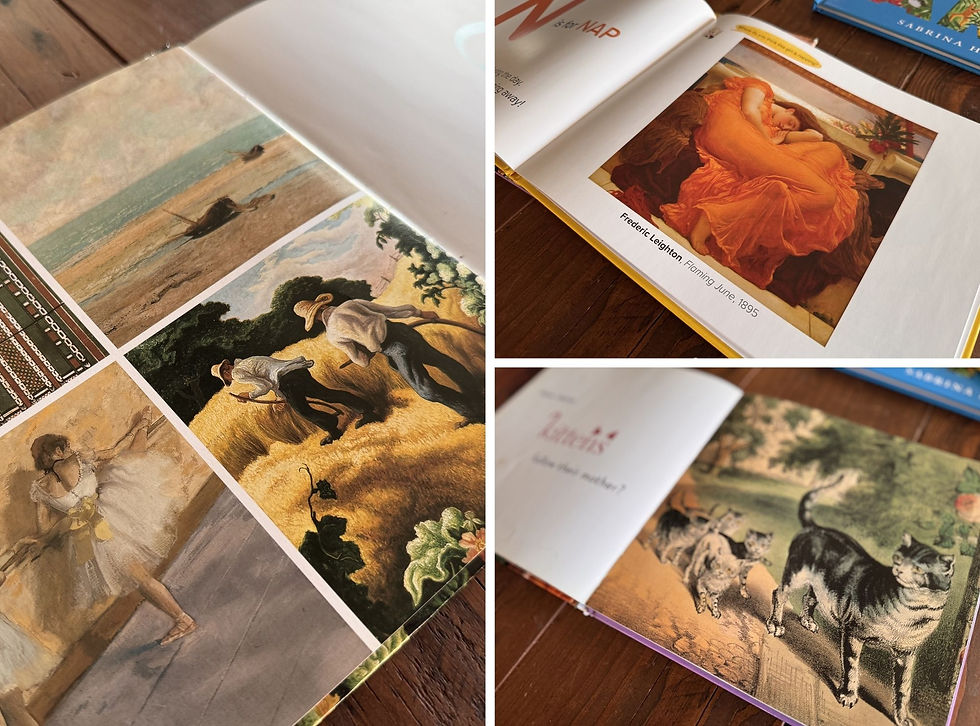
If you're in a hurry, these are the books we've loved most:
I never planned to be the mom who reads Vermeer and Monet at bedtime. It happened almost by accident, and now I can't imagine our early years without it.
It started because I was tired of the same five board books, the bright plastic-coated ones that go forgettable the second you close the cover. I wanted something that could survive fifty rereads, because that's what little kids do with books they love. That search is how fine art books for preschoolers found their way into our house, and it changed our reading time more than I expected.
A quick, honest note: some links in this post are affiliate links, which means I may earn a small commission if you purchase through them, at no extra cost to you. I only recommend books my own kids have actually read, loved, and asked for again.
Why art books outlast everything else on the shelf
A painting is dense. One image holds dozens of colors, shapes, and tiny details to find, which is why these books survive repetition in a way a typical alphabet book doesn't. A cartoon illustration of "five apples" gets boring fast. A real painting with five apples tucked into shadow and light gives your child something new to notice every time. And while they hunt for that number or letter, they're also absorbing color recognition, vocabulary, and a quiet sense that art is worth looking closely at.
The first book: Museum 123, by The Metropolitan Museum of Art
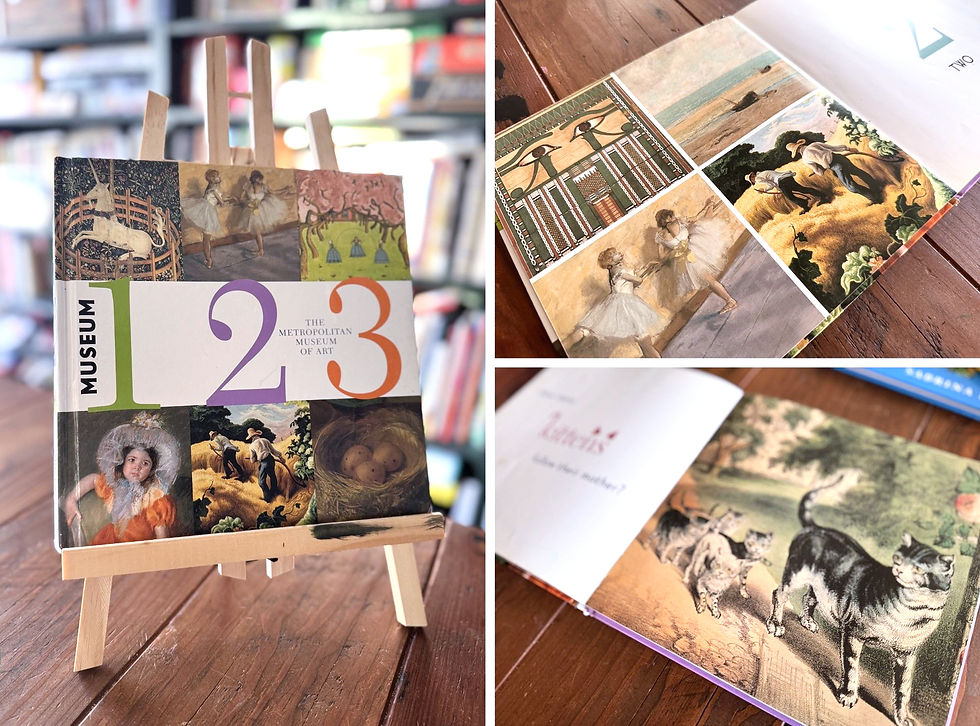
This is the book that hooked us first, and the one I recommend to almost every parent who asks where to start.
Museum 123 gives numbers one through ten four pages each — first inviting your child to hunt for that number of objects in one piece of art, then turning the page to see four more works featuring that number. The art ranges from ancient Egyptian tomb paintings to Van Gogh, so your child gets a quiet tour through history without ever knowing it's a lesson.
Here's the moment that sold me. My son, maybe three and a half, stopped in front of a painting at a local art exhibit, pointed, and said "five!" before I'd even asked. She'd never seen that exact painting in the book. He'd simply learned how to look. That's the real outcome here: not just number recognition, but the habit of really looking.
The artist and artwork information is listed in the back, too, so when your child asks "who painted this one?" you actually have an answer ready.
The second discovery: Sabrina Hahn's Art & Concepts for Kids series

If Museum 123 was our gateway, this series is where my kids really started to shine. I started with the two-book set, ABCs of Art and 123s of Art, then went back for the rest once I saw how much they loved it.
ABCs of Art pairs each letter with a word that appears in a famous painting — your child can spot the earring in Vermeer's Girl with a Pearl Earring or count fruit in Cezanne's Basket of Apples. 123s of Art does the same with numbers one through twenty, using Klimt, Monet, and Maria Sibylla Merian, among others. Every page includes an interactive question, so it's never just "name the letter and move on."
This is the set that taught my son his colors in a way that finally stuck. We'd land on the Monet page, and instead of me saying "this is blue," the book had us hunting for it inside the brushstrokes of Water Lilies. A few weeks later, at a museum gift shop, he picked up a postcard and said, "That's Impressionism, like Monet." He was four.
Once we were hooked, we added two more. Animals in Art turns the same idea toward the animal kingdom — your child identifies animals in paintings like Odilon Redon's Butterflies or Franz Marc's Blue Horse I, learning sounds and habitats along the way. It became our go-to for car rides. Bedtime with Art is the one we reach for almost every night now, moving gently from sunset to moonrise through Monet's Stacks of Wheat, Stubbs's Sleeping Leopard, and Rousseau's The Sleeping Gypsy — a rare bedtime book that actually helps with bedtime.
What surprised me most is how well the series scales as kids grow. My older child started asking "why" — why that color, why that shape repeats. Author Sabrina Hahn is a Harvard-trained art historian, and you can feel that care in how deliberately each painting was chosen.
The outcome I actually care about
My kids didn't just learn letters and numbers from these pages. They learned to slow down and look. They built vocabulary they wouldn't have picked up anywhere else, dropped into conversation the way other kids drop cartoon character names. And they asked for these books again and again, which meant we built a nightly habit of sitting close together, noticing things side by side.
If you're looking for books that survive repeat reading and teach something real every time, start where we did: Museum 123, then the Sabrina Hahn series, ABCs of Art, 123s of Art, Animals in Art, and Bedtime with Art. Every one is soft at the corners on our shelf right now — which, in our house, is the only review score that's ever mattered.
One bonus pick: Art Masterpieces to Color
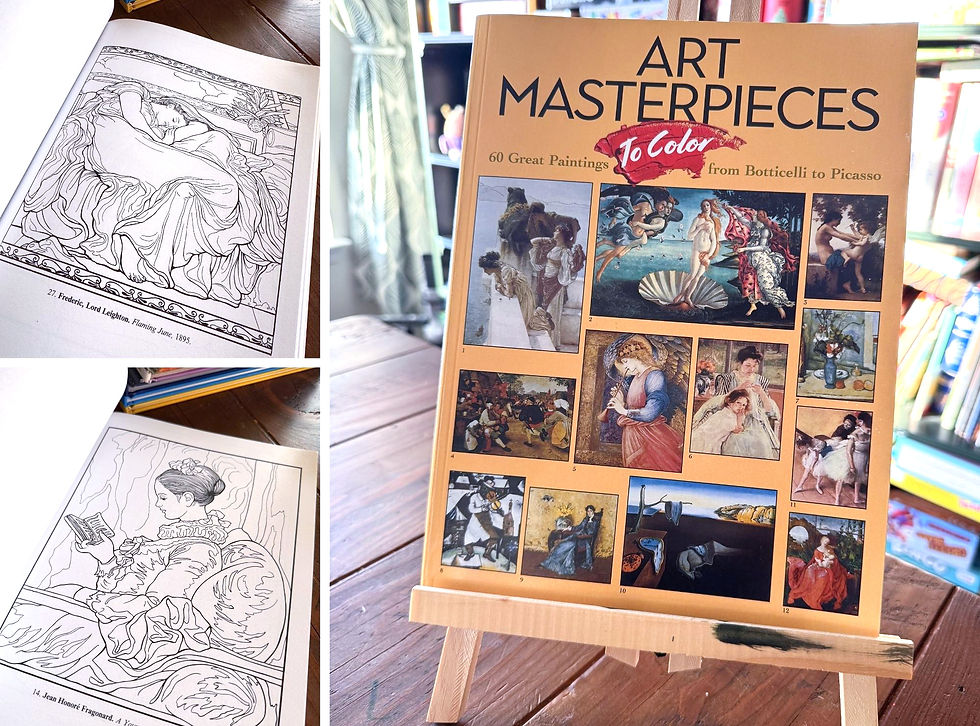
Once my kids could hold crayons steadily, we added Art Masterpieces to Color: 60 Great Paintings from Botticelli to Picasso into the mix. It's not a read-aloud, it's a hands-on follow-up — line-art versions of real masterworks, with the original colors shown for reference, so your child can color a Monet or a Cassatt and actually compare it to the real thing afterward. It turned passive looking into active making, and that combination is hard to beat.

Comments