Three Books That Made the Founding Fathers Feel Real in Our Homeschool
- HumbleHomeschoolerMama
- Jun 21
- 6 min read



A quick, honest note: some links below are affiliate links — if you click through and buy, I may earn a small commission at no extra cost to you. I only recommend books my own kids have actually read and loved. Thank you for supporting this little corner of the internet!
I used to think teaching the founding era meant choosing between two bad options: dry timelines my kids would forget by Friday, or thick biographies that would sit on the shelf looking impressive and unread. It took me longer than I'd like to admit to find the third option — books short enough to finish in one sitting, but rich enough to leave my kids asking questions at dinner that had nothing to do with the assignment.
That's the real test I use now. Not "did we cover the material," but "did someone in this house bring it up again later, unprompted." These three books all passed that test, and they did it in a way that felt deliberate once I looked back at them together. One book hands you the achievement — the document, the debate, the deal that almost fell apart. The other two hand you people — flesh-and-blood men who were young once, broke once, scared once. Read in that order, they don't just teach the founding era. They make you want to keep going.
Why I don't hand my kids all three at once
I'll say this up front because it matters more than which books you pick: I never assign these back-to-back. If you read all three in a single week, they blur into "more founding fathers stuff," and the whole point — curiosity — gets flattened. I space them out. A week or two between each one, sometimes longer, so each book gets to be its own discovery instead of homework item #2 of 3.
The goal isn't completion. It's the moment my daughter looked up from the kitchen table and said, "Wait, he was an orphan?" That sentence is worth more to me than a finished checklist.
Book One: Creating the Constitution by Wil Mara — the achievement
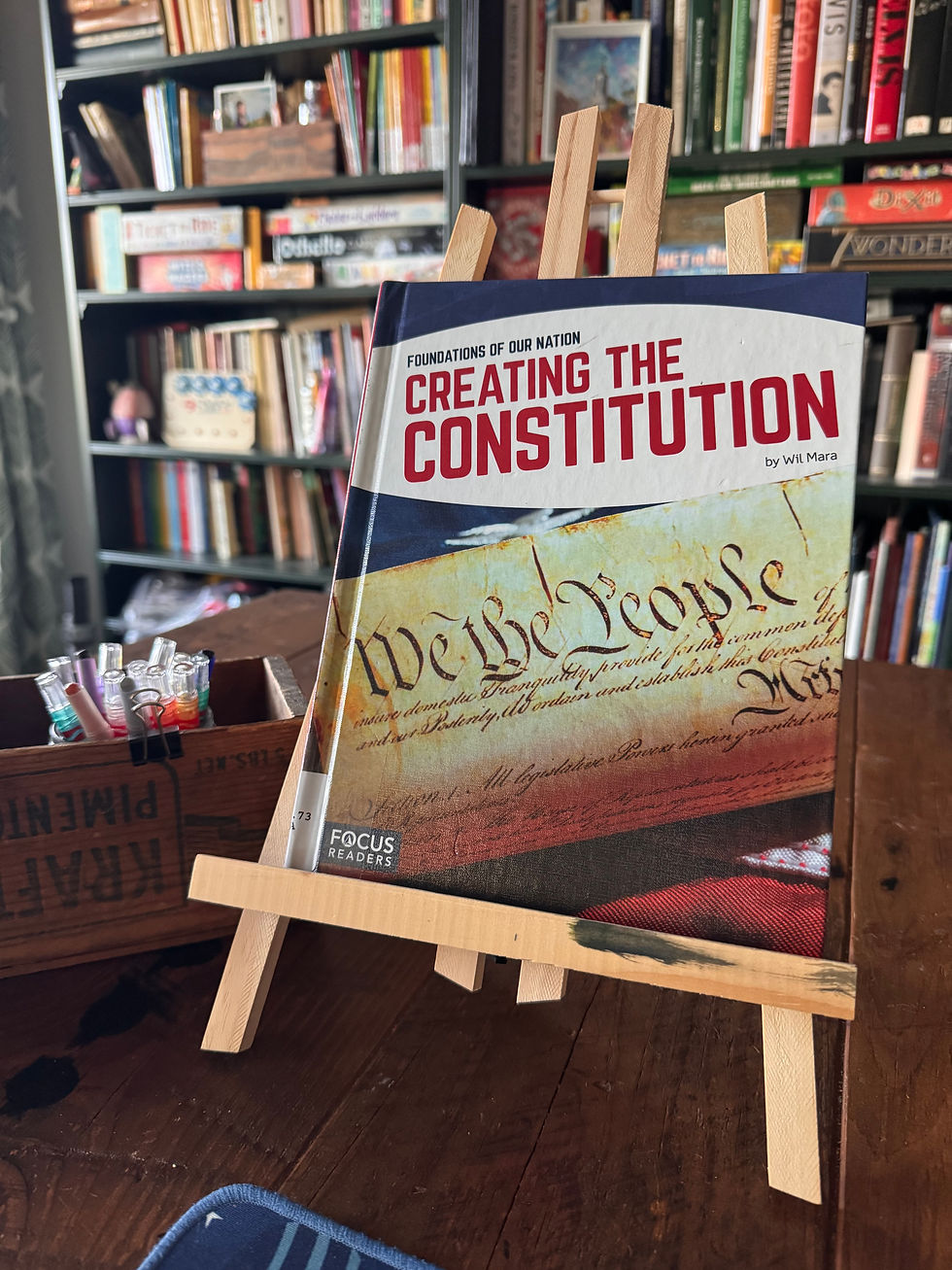
This is where I start, because it gives kids the stakes before it gives them the personalities. Creating the Constitution is part of the Foundations of Our Nation series, and it does something I genuinely respect: it treats the Constitutional Convention like the high-tension event it actually was, instead of a foregone conclusion that just happened to work out.
What I appreciate most is the "Voices from the Past" feature tucked into the book — actual primary source material, presented in a way an eight- or nine-year-old can sit with. We didn't rush past those pages. My son read one aloud twice because he wanted to make sure he understood what someone in 1787 was actually worried about. That's not a small thing. Most kids' history books summarize the past for you. This one occasionally steps aside and lets the past speak for itself.
This book doesn't ask "who were these people," it asks "how do you get dozens of strong-willed men in a hot room in Philadelphia to agree on anything." That's the question that hooks a kid, because it's a question about conflict and compromise, not just dates. By the end, my kids understood the Constitution wasn't handed down — it was negotiated, argued over, nearly abandoned more than once. That's the achievement.
And once a child understands the achievement, they start wondering about the people who pulled it off. Which is exactly where the next two books come in.
Book Two: Alexander Hamilton: From Orphan to Founding Father — the person who shouldn't have made it
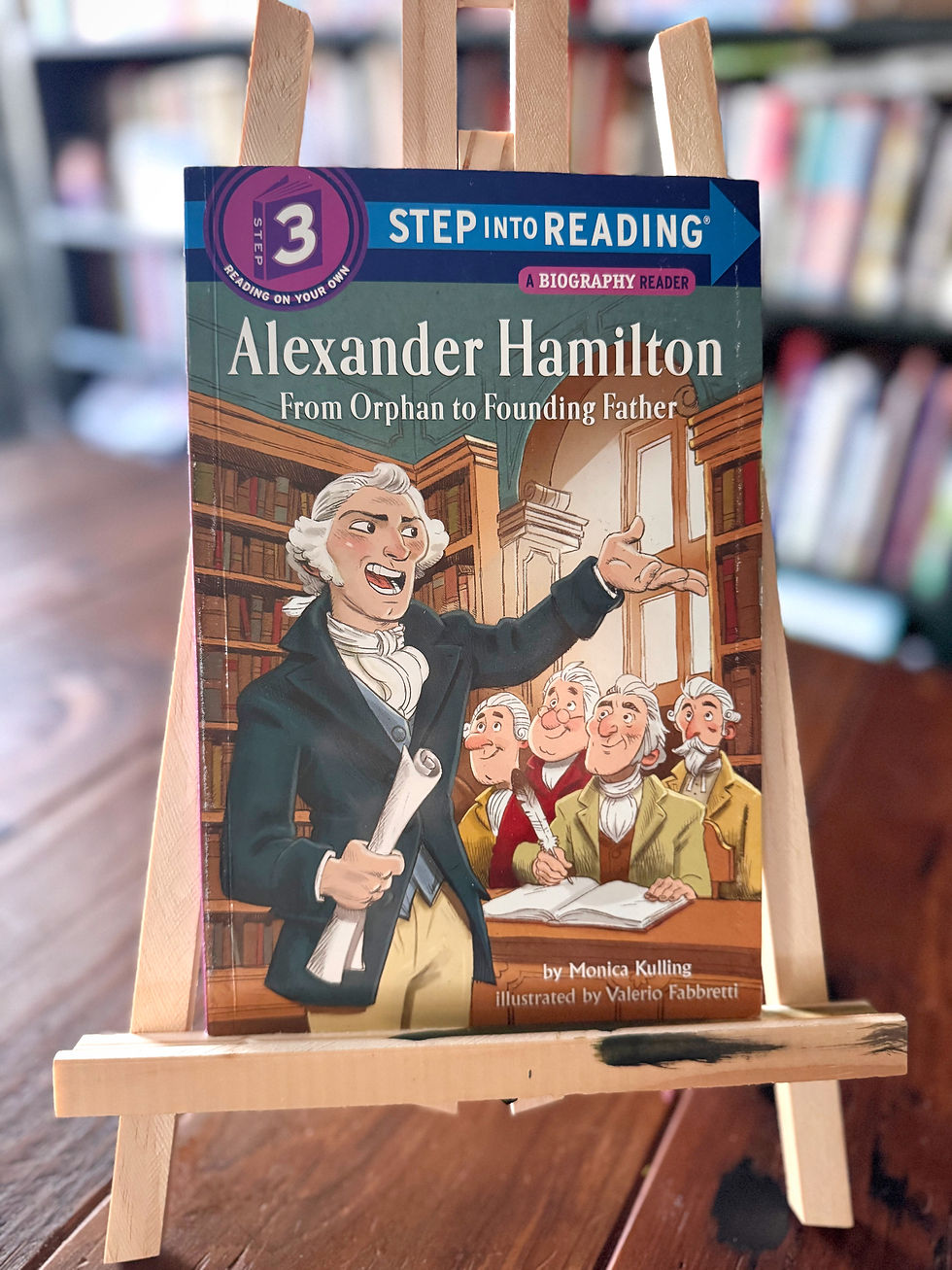
If the first book is the "what," this one is the "who," and it's the book that turned my reluctant reader into someone who asked to keep going past bedtime.
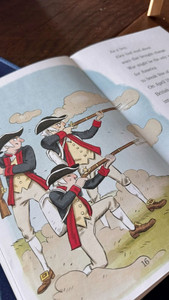
Monica Kulling's Step into Reading biography opens with the fact that does all the work: Hamilton wasn't born in America. He was an orphan from the West Indies, with no money, no family connections, no obvious path to anything — and he became George Washington's right-hand man, helped secure ratification of the Constitution, and built the first national bank. That arc, told plainly and without sentimentality, is the kind of story that makes a kid sit up. Not because it's inspirational in some abstract way, but because it's specific. An orphan. From an island. Who ended up shaping how the country handles its money, to this day.
I'll be honest about something this book doesn't shy away from: it includes Hamilton's death in the duel with Aaron Burr, and it doesn't soften the moral complexity of it. One detail stuck with my older child for days — the book notes that Hamilton shot to miss, while Burr did not. We talked about that more than almost anything else in the book. Not because it's gruesome, but because it's human. Ambition, honor, mistakes that can't be undone — these are heavy themes, handled at a reading level that doesn't talk down to kids, and that combination is rare.
This is also, not coincidentally, where the Constitution from Book One stops being an abstract document and becomes something a specific, flawed, brilliant person fought hard for. My kids didn't go looking for that connection. It just showed up, the way good sequencing lets it.
Book Three: Stories of Great Americans for Little Americans — the wider cast
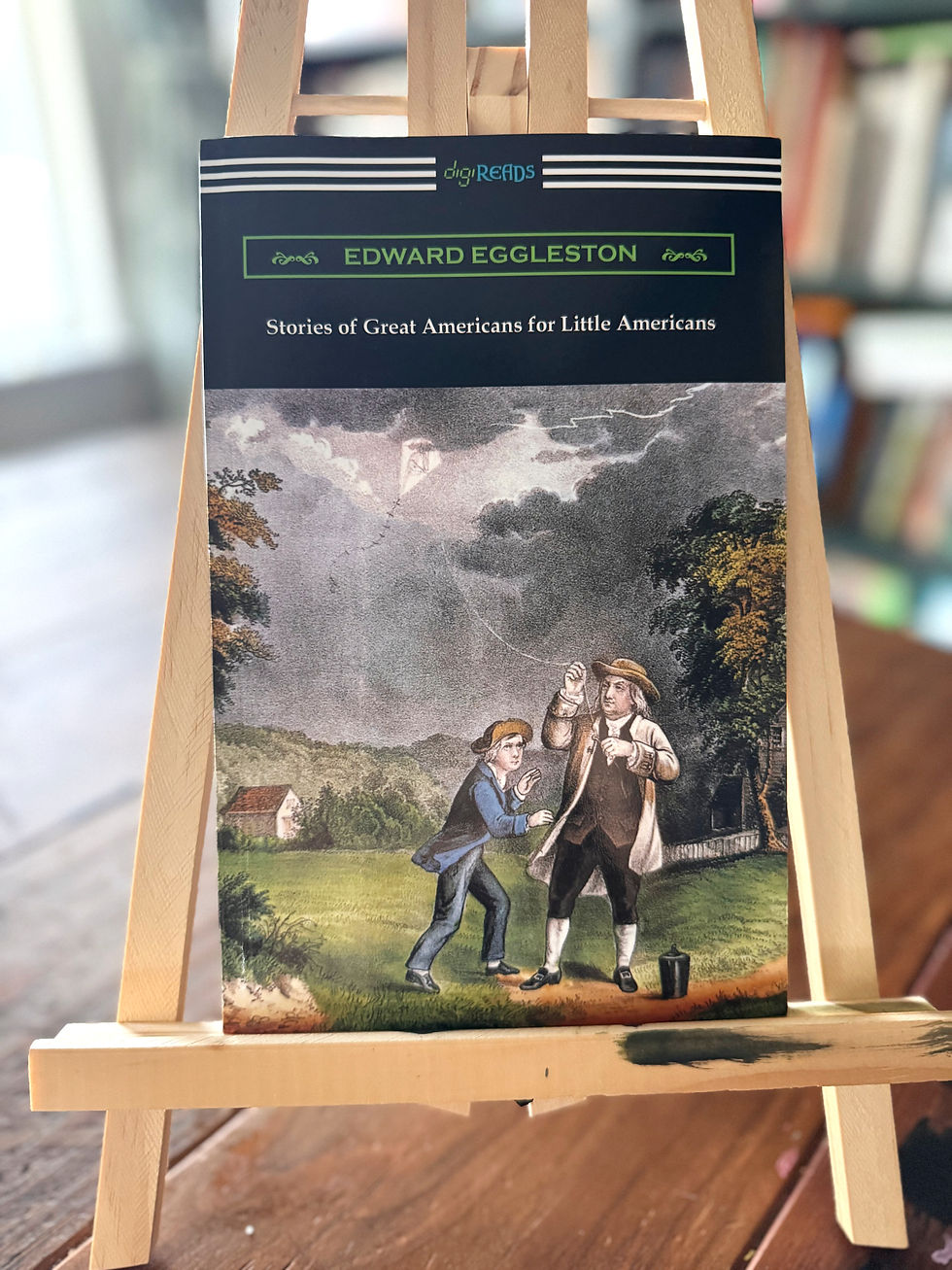
By the time we got here, my kids had one founding father (Hamilton) and one founding achievement (the Constitution) firmly in their heads. This third book is where the era widens out. - Before I continue, there's a much prettier edition available on Amazon now.
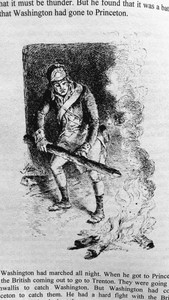
Edward Eggleston wrote this collection well over a century ago, and there's something I find genuinely valuable about that vintage. It moves through figures like Christopher Columbus, Captain John Smith, George Washington, and Benjamin Franklin in short, distinct biographical sketches — each one a self-contained story rather than a chapter in one continuous narrative. That structure turned out to be perfect for us. We'd read one story, close the book, and not pick it back up for several days. Each sketch is built to stand alone, which means a child can wander away with just one figure rattling around their head for a while before meeting the next.
What this book gave us that the other two couldn't was scale. Hamilton is one extraordinary life. The Constitution is one extraordinary achievement. This book is the reminder that the era was full of extraordinary lives, several of them, overlapping and occasionally colliding with each other. My daughter, after finishing the Franklin sketch, asked whether he and Hamilton ever met. (They did, at the Convention — which sent us straight back to Book One to check.) That kind of cross-referencing, kids doing it themselves, unprompted, is the whole reason I sequence books this way instead of picking one "comprehensive" volume and calling it done.
How the three actually connect
Here's the shape I've come to see, after going through this sequence with my own kids more than once:
Creating the Constitution gives you the event — the room, the stakes, the negotiation. It teaches a child that the founding wasn't inevitable.
Alexander Hamilton: From Orphan to Founding Father gives you the person — a single life, traced closely enough that a child can hold the whole arc in their head, from nothing to everything.
Stories of Great Americans for Little Americans gives you the cast — the wider field of people who were all, in their own ways, wrestling with the same moment in history.
Read in that order, the era builds like a story should: stakes, then a character you care about, then the realization that the character you care about was surrounded by dozens of others just as compelling. None of these books tries to be the complete picture. That's their strength, not their limitation. Each one leaves a door open, and my kids have walked through every single one of those doors on their own, asking for the next book before I've even suggested it.
That's the only metric that's ever mattered to me in our homeschool. Not whether we finished the unit. Whether someone wanted to keep going.
If that's the kind of momentum you're after, I've also written about early readers' book choices more broadly, with a longer list of history titles that have worked well in our house. Check it out if you're building out a reading list beyond the founding era.

Comments